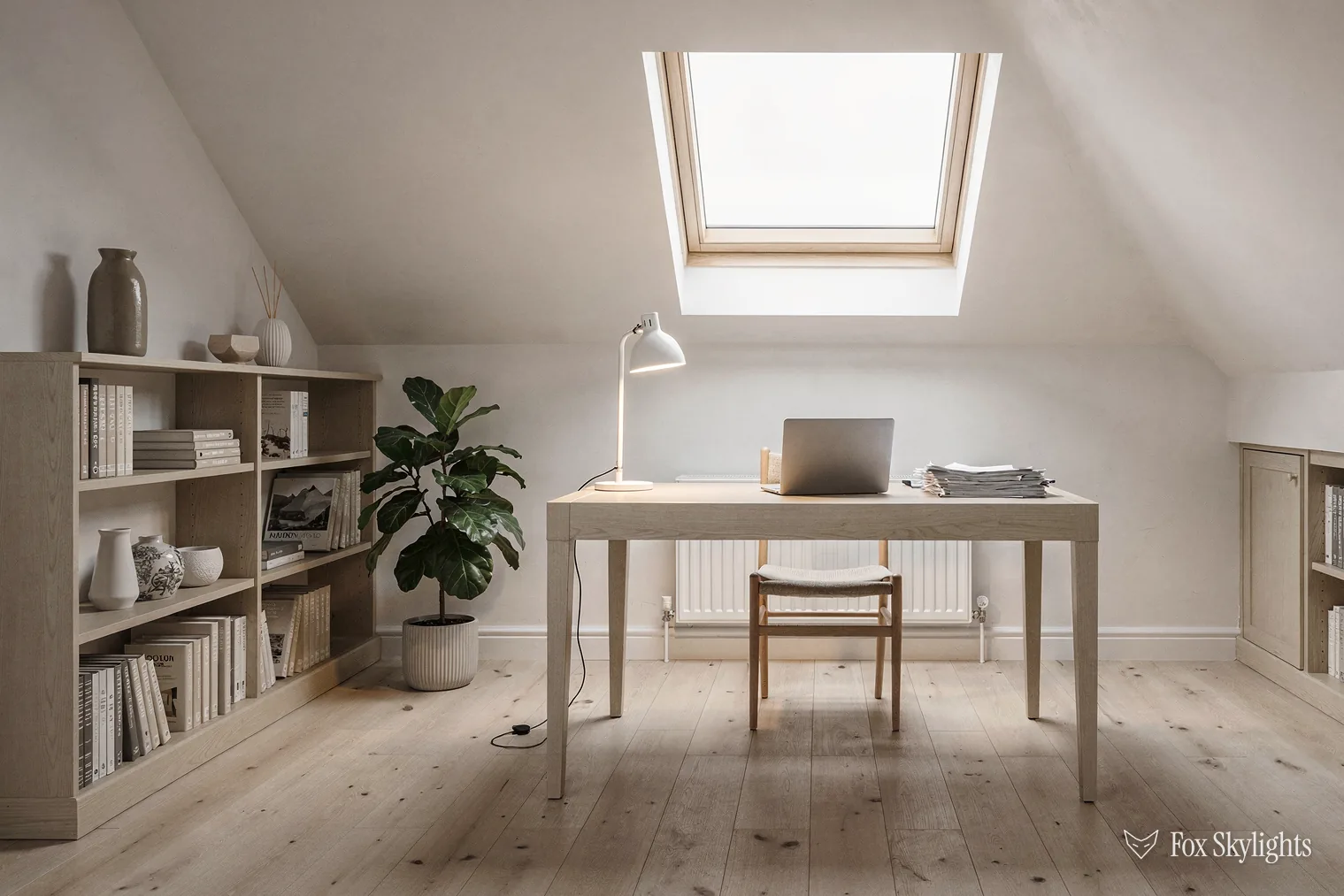
The signs that point to a new window
A roof window is a working part of the roof, and it wears like one. It sits at an angle, takes the sun on one face and the rain on the other, and gets opened and shut for years. Some of the signs are obvious. Others show up first as a stain on the lining or a draught you put down to the weather.
These are the ones that count when we look at a window as a candidate for replacement:
- Misting between the panes. A grey cloud or drip marks inside the sealed glass unit means the seal has failed. The glass no longer insulates as it should, and the haze does not clear. Our page on replacing misted rooflights goes through why this happens.
- A sash that will not close square. If you have to lean on the handle, or the sash sits proud of the frame at one corner, the hinges, the frame or the rafter opening has moved.
- Soft or dark timber. Pine frames are painted or lacquered, and when the finish breaks down, damp gets in. Press a thumbnail into the bottom corners of the frame. If it goes in, the timber has lost its strength.
- Staining on the lining or ceiling round the window. A brown ring means water is getting past something, either the flashing outside or the frame itself. It needs tracing to its cause before anyone decides.
- Drips of condensation every winter. One cold morning is normal. Water running down the glass on most mornings, with the lining going black at the edges, says the window is losing heat badly or the room is not ventilating.
- Controls that no longer do what they should. An electric window that opens only some of the time, or a rain sensor that has stopped responding, is old equipment in a unit that may be due for the whole swap anyway.
One sign alone, on a window that is otherwise sound, is a conversation. Two or three together is the answer.
Age: what it tells you and what it does not
People ask how many years a VELUX window lasts. No single number fits, because the answer depends on the room, the aspect and how well it has been looked after. A south-facing window over a kitchen takes more punishment than a north-facing one over a landing. A window that was fitted with the wrong flashing kit for the roof covering will fail early, and one fitted carefully will outlast its neighbour.
What age does tell you is what the window is made of and how it was glazed. Older roof windows were built to older standards. Glazing has moved on since they went in: a window from a few decades ago will usually lose more heat than a current one with modern coated, gas-filled glass. If the room above your head is cold in winter and hot in summer, replacing the window with a current one can change that. The heat-loss limits for new roof windows are in the Part L summary on the planning and building regulations guide.
Age also matters for a plain practical reason. Manufacturers change their ranges. A window that is old enough may have no matching part available, and then the choice is between a new window and a patch that does not match. That is a separate point from whether the window still works. The survey sorts it quickly because the size code is stamped on the frame, and this size-code explainer shows how to read it.
Replacing one window or the whole opening
Most of the time a replacement means taking out the old window and putting a new one into the same opening. If the new window has the same size code as the old one, the rafters, the trimming and the plasterboard reveal stay as they are. That is the simple case, and it is the one people hope for.
It does not always go that way. Sometimes the old window has been in so long that the surrounding roof tells its own story. The flashing may have been fitted for a different tile profile. The battens beneath may have been cut about. Sometimes the opening is the wrong size for the room: a window that was squeezed between two rafters because that was easy at the time, in a room that deserves a bigger one. A replacement is a chance to put that right, and it might involve altering the rafters. That is a bigger job, and it is the kind of change that can bring Building Control into it. We deal with the Building Control paperwork if the work needs it.
The cheapest-looking option is not always the cheapest. If a window needs replacing and the flashing round it is also at the end of its life, doing one without the other means going back to the roof twice. We say so at the survey, so the decision is yours to make with the full picture.
What the survey looks at
We come out, look at the window from outside and in, and give you a plain view on whether it needs replacing now, later, or not yet. There is no charge for the survey, and the price that follows is fixed and in writing.
On the roof we look at the flashing, the way it meets the tiles or slates, and the state of the covering round the window. Inside we look at the frame, the lining, the ceiling and any staining. We read the size code and note the control type. We check the glass for mist and the sash for how it sits. If the window is electric, we look at how it is wired and whether the controls are at the end of their useful life too.
If a window is fine, we say so. A sound window is worth keeping, and a quote to replace one that does not need it helps nobody.
Next steps
If your window shows two or more of the signs above, the next step is a look at it. Ask for a free survey and we will confirm whether it needs replacing and what the replacement involves. You can also send photos of the window and its size code over WhatsApp on 07880 284133.
For the wider picture of what we fit, see VELUX windows. To understand how the size of a replacement is decided, read VELUX flashings for tiles and slates. Whichever roof window you are replacing, a skylight in the slope is a rooflight in the trade's language, and the same questions apply: does it still keep the weather out, does it still shut, and does it still earn its place in the room?