- 01Interwar suburbs built for factory workers
- 02Victorian terraces inside the ring road
- 03Thirteen conservation areas by the centre
- 04A canal opened here in 1769
Coventry: 26.2 road miles south-west, about 40 minutes down the road
Skylights and rooflights in Coventry
Rebuilt around its factories, a cathedral city whose roofs run from interwar suburbs to the last Victorian terraces inside the ring road.
Or call 0116 430 0516
Factories, terraces and a ring road
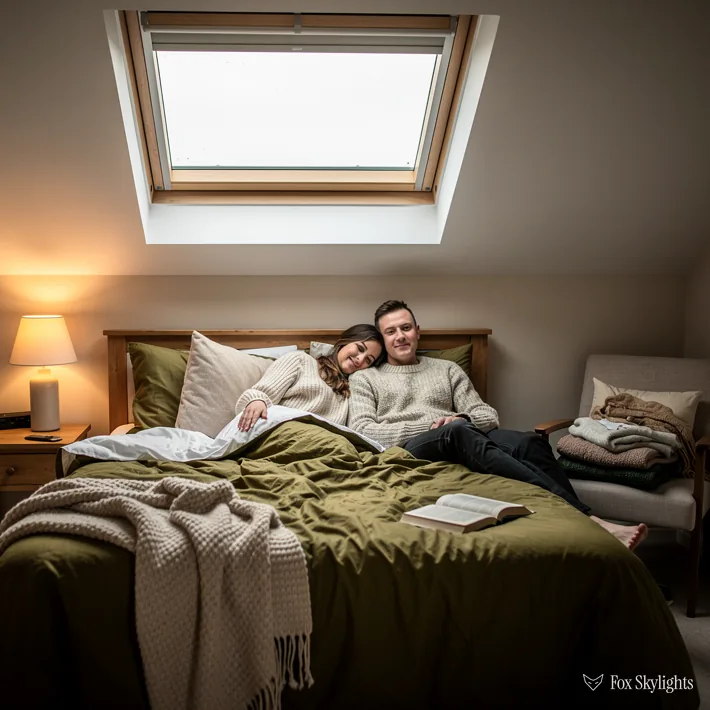
Coventry's factories kept growing after 1918, and housing for the workers went up across the city in the 1920s and 1930s. Roofs from that wave suit a roof window in the loft, once the timbers have shown us where it can sit.
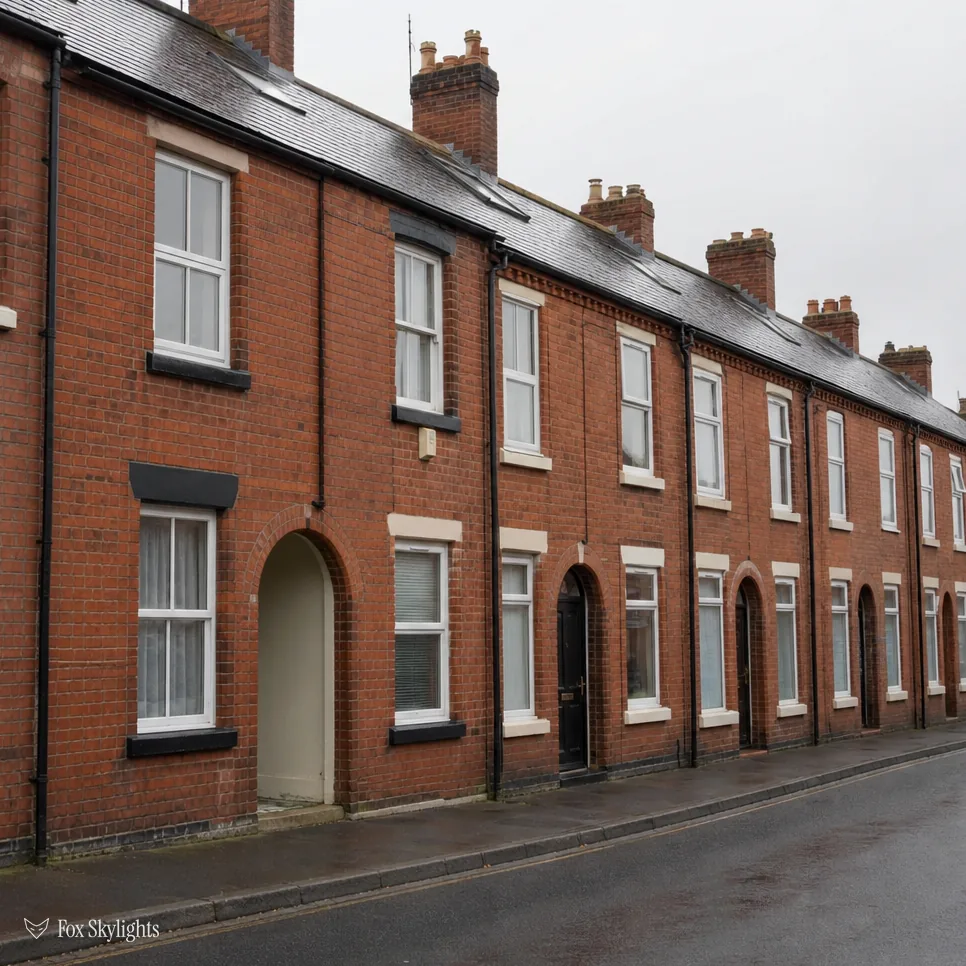
Starley Road is a single street of Victorian terraces that stayed inside the ring road after residents campaigned against demolition in the 1980s. A terrace has short slopes and close neighbours, so a small rooflight is the right scale.

The planning register records thirteen conservation areas within about 1.4 kilometres of the city centre, among them Spon Street, Greyfriars Green and the canal. Near any of them we check the boundary and the listing before we quote.
Where each product earns its place
-
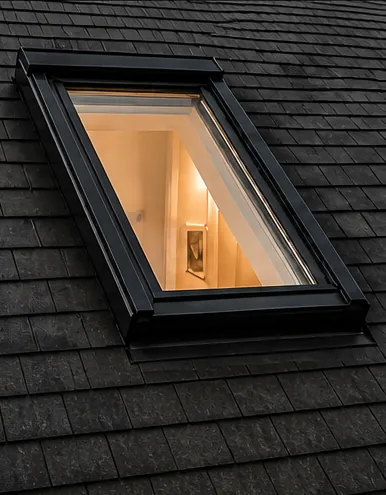 Roof windows
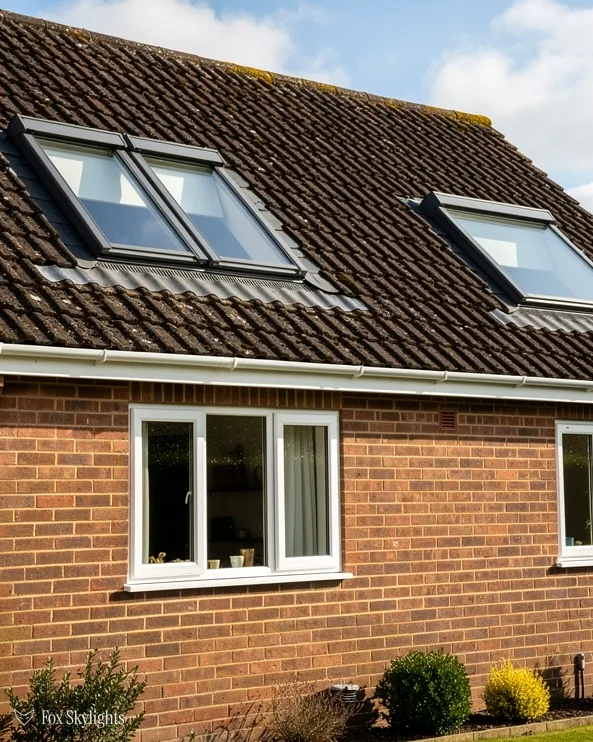
For interwar loft rooms that need headroom and daylight, slotted into the slope after a look at how the timbers lie.
-
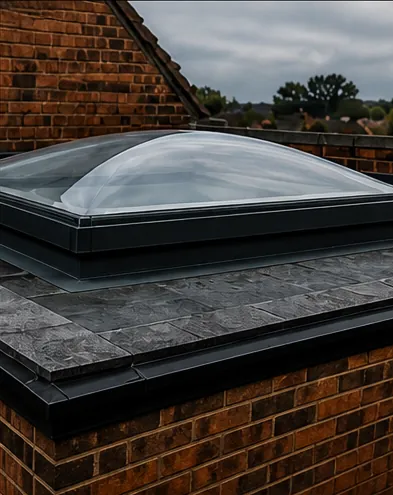 Flat roof rooflights
For kitchens and extensions with a flat roof, raised on a kerb so water drains off rather than lingering.
-
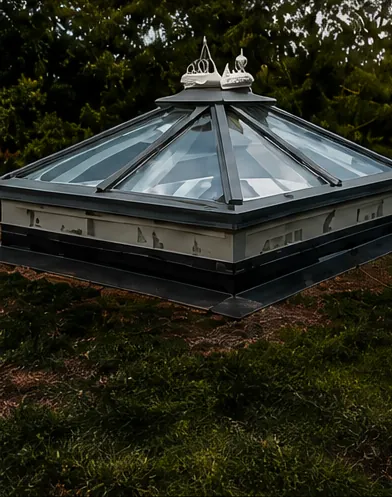 Conservation rooflights
For houses in or beside the conservation areas, where a low profile and thin bars keep the slope looking as it did.
-
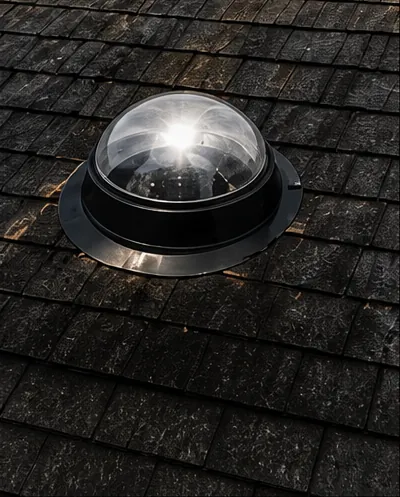 Sun tunnels
For the landing or bathroom in a terrace that has no sloping ceiling of its own, lit through a tube from a small dome.

THE FOX BROADSHEET · COVENTRY
Built for the factories
Coventry is a cathedral city and metropolitan borough in the West Midlands, on the River Sherbourne, and it has been a large settlement for centuries. Much of what stands on its streets was driven by work. The Coventry Canal opened in 1769 and tied the city to the national canal network. By the 1890s Coventry had the largest bicycle industry in the world, though bicycle making declined from then on and ended entirely in 1959, when the last maker left. In recent years the city has moved away from manufacturing towards business services, finance, research, design and development, and creative industries.
The housing followed the work. With the industrial base still climbing after the Great War ended in 1918, numerous private and council developments went up across the city in the 1920s and 1930s, to house the large influx of workers who came for the factories. Those interwar suburbs are where a roof window earns its keep: the loft is already there, the headroom may well be decent, and the room under it has nothing but a hatch to let light in.
Then there is Starley Road. One street of Victorian terraces remains inside the ring road, saved from demolition in the 1980s by a campaign among its residents. A terrace brings a particular set of roof problems. The slopes are short, the houses share walls, and the neighbours are close enough to see what you are doing. A big opening would look out of place; a small roof window or a slim rooflight set just below the ridge looks like it belongs.
The but
The terrace has a rear bathroom and a stair landing with no sloping ceiling above, so no rooflight can look straight down into either.
The way in
A <a href="/services/sun-tunnels/">sun tunnel</a> runs a reflective tube from a small dome on the slope, across the loft, to a diffuser in the ceiling below.
Not every room has a sloping roof above it. A bathroom at the back of a terrace, a landing between two bedrooms and a hallway that has never had a window all depend on borrowed light. Which product serves them depends on what lies above: a floored loft suggests a tunnel, an open roof space suggests a window on the nearest slope, and a flat roof suggests a rooflight set into it.
Flat roofs turn up in every era. A rear kitchen added to a house from the 1930s, or a flat-topped bay on a terrace, is usually bright at the glass end and dim at the worktops. A flat roof rooflight in the middle of the ceiling fixes that, provided it stands on a kerb tall enough to shed water and built level enough to seat the frame.
New glass in an existing home answers to Part L 2021, which gives roof windows a target of 1.4 W/m²K (a good WER band B label also counts) and rooflights a target of 2.2.
Thirteen areas, one city council
Planning questions for the city go to Coventry City Council. An unlisted house with no special controls can usually take a rooflight as permitted development, using Class C of the 2015 order. Three conditions come attached. Projection is capped at 150mm past the slope's surface. Height is capped by the roof's top edge. On a side slope the pane needs frosted or similar glass and a closed frame, with one exception: a sash starting over 1.7m up from the floor.
The city is unusual for how many protected areas gather near its middle. The register records thirteen conservation areas within roughly 1.4 kilometres of the centre point. Hill Top and Greyfriars Green hold the most listed buildings of the group, 24 recorded in each. At Hill Top six are Grade I and six Grade II*; at Greyfriars Green nearly all are Grade II. Spon Street has 23. The table gives the headline figures for six of them.
| Area | Designated | Listed recorded |
|---|---|---|
| Hill Top | 8 August 1969 | 24 |
| Greyfriars Green | 8 August 1969 | 24 |
| Spon Street | 8 August 1969 | 23 |
| High Street | 12 October 1982 | 8 |
| Coventry Canal | 19 June 2012 | 9, all Grade II |
| Far Gosford Street | 21 October 1992 | 5, all Grade II |
The others in the same group are Lady Herbert's Garden and the Burges, Naul's Mill, Spon End, Kenilworth Road, London Road, Earlsdon and Chapelfields. By itself a conservation area leaves Class C standing; what to watch for is an Article 4 direction, and with this many areas in one city it is worth asking the council street by street. Where a house is listed, listing consent has to be obtained before a rooflight goes in, however small. Flats and maisonettes have no householder rights at all.
A reader asks
My house backs onto the canal. Does that put it inside the conservation area?
Possibly, though the boundary is drawn on a map and not by the water. The register dates the Coventry Canal area to 19 June 2012 and records nine Grade II listed buildings inside it. Send us the address and we check it against the boundary before the survey. If it is inside, a low-profile frame is the sensible choice anyway, and the long version sits in the guide to what planning and building control expect of a rooflight.
Where a conservation area applies, appearance counts as much as permission. A conservation rooflight lies close to the slope, has a thin frame and a single central bar, and reads from the street as part of the roof rather than something laid on top of it. That matters in a place where so many of the surrounding buildings carry a listing.
The practical test for any address inside the central ring of areas is three questions asked in order. Is the building listed? Is it a flat or maisonette? Has the council placed an Article 4 direction on the street? Each answer is held by the council or on the national register, and we collect them before we quote, so that the price you receive is for a job that can go ahead.
Whatever the planning answer, cutting through a roof is building work. If a notification is due we send it ourselves, to whichever of the council or a private approver suits the job.
Motorways, a ring road and a buried river
The drive from Leicester is 26.2 miles to the south-west and takes about 40 minutes. Five motorways run near the city, the M1 and M6 among them, and ten classified roads lie inside a kilometre of the centre, the A429 and A4600 included. Coventry station is open, roughly 0.9 kilometres in from the centre, while the old Coundon Road station, a kilometre out, is closed. For a visit, the road is how we arrive.
The River Sherbourne has a curious history. It runs under the city centre, paved over during the rebuilding that followed the Second World War, and is not commonly known. The Coventry Canal passes close by, and Coombe Country Park, the city council's only country park, lies just outside the boundary. None of this changes how a skylight goes in, but it explains why the middle of the city is a place of culverts, basins and bridges, and why a roof close to the water can be a good deal more visible than the owner expects.
Around the centre, the map names a ring of districts: Hillfields, Spon End, Bishopsgate Green, Lower Stoke, Earlsdon, Cheylesmore, Ball Hill, Chapelfields, Stoke Heath, Coundon and Radford. Each sits between roughly one and two and a half kilometres from the middle. Each has its own streets, and a survey in one will not tell you what a survey in the next will find. So the first visit is always to the roof itself, with a torch in the loft and a tape on the rafters, and the notes we take there go straight into the written quote.
On a larger house with a kitchen or garden room under a flat roof, a roof lantern gives height as well as light. A lantern projects well beyond the 150mm that applies to rooflights, which makes a conversation with the council sensible before one is ordered. We raise that early, because a lantern is made to order and the answer should arrive before the glass does.
Where a rooflight sits high over a stair or a double-height kitchen, an electric opening rooflight is worked from a wall switch or remote, so the stale warm air can leave without a ladder. Warm air rises, and the roof is where it should leave.
Loft rooms need the fire rules explained. Fire guidance in Approved Document B reserves escape-window status for low floors, up to 4.5m. Convert a loft above two storeys and the exit becomes a protected stair, so it falls to the roof window to bring daylight and a breeze.
A reader asks
Can a sun tunnel really light a landing with a loft room above it?
If the room above is a floored loft, the tube has to pass through it, and the route needs to be clear of stored boxes and joists. We check that at the survey. If the path is blocked, a rooflight on another slope can be a better answer. Whichever product wins, the quote you receive is fixed and in writing.