- 01Coalfield streets and weavers' overspill
- 02A precinct centre from the 1960s
- 03Six listings in the town centre
- 04Canal-side plots and flat extensions
Out towards the south-west, Bedworth is 35 minutes from Leicester by car (21.1 miles)
Skylights and rooflights in Bedworth
Pits, ribbon looms and a rebuilt centre made this Warwickshire market town, and its older roofs still hide rooms that want more daylight.
Or call 0116 430 0516
Pit town, precinct town, church town

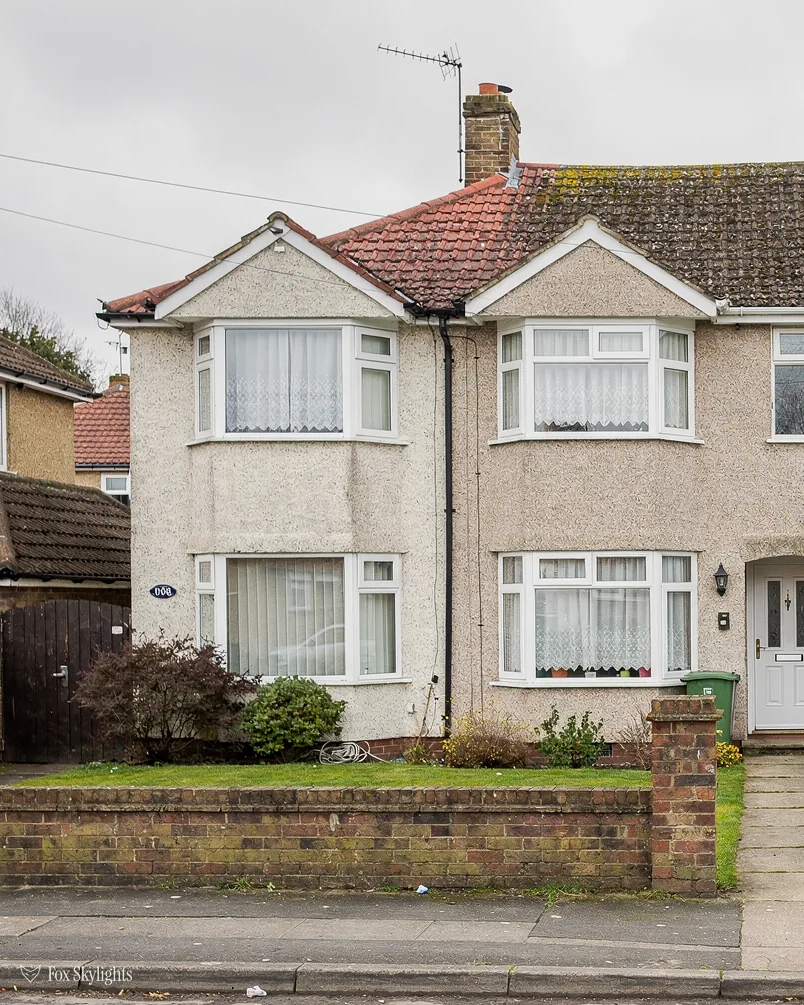
Records from 1730 count 260 houses in Bedworth, and coal mining and ribbon weaving carried the town on from there. Houses from that long run of building differ street by street, so we read each loft on its own timbers.
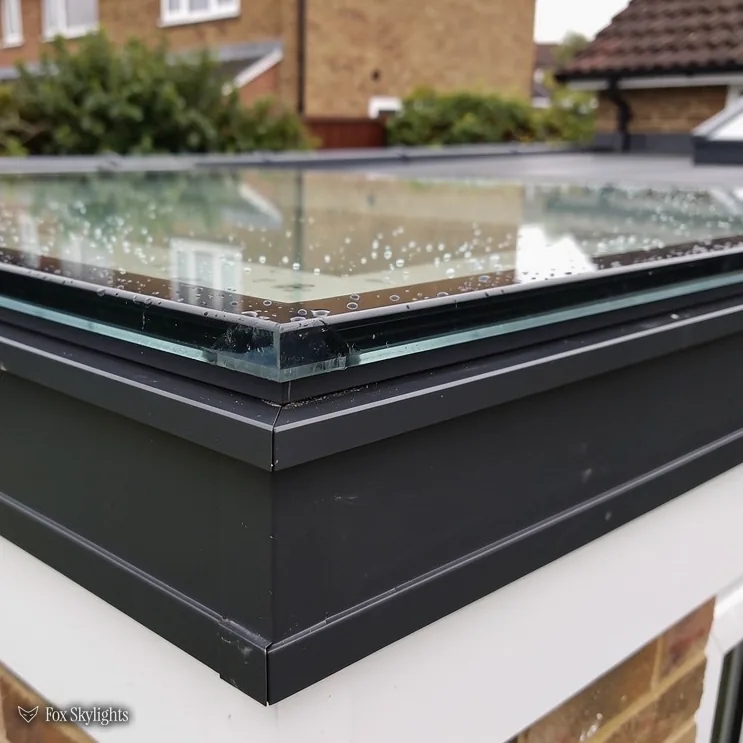
The centre was largely redeveloped in the 1960s and early 1970s into a pedestrianised precinct. Buildings of that period often carry flat roofs, and any original domes on them are due a look.
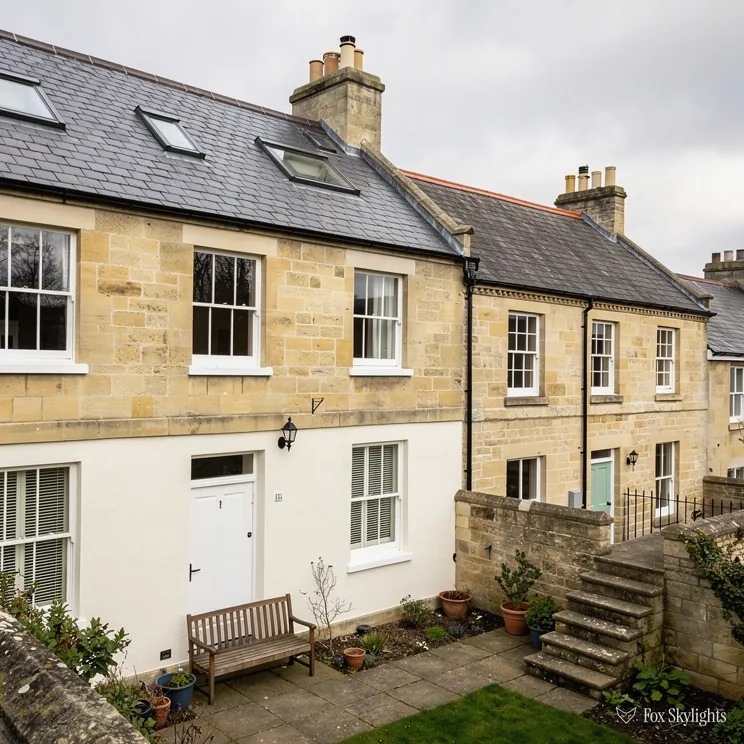
Bedworth Town Centre was designated a conservation area in 1988, and the register places six listed buildings in it, two at Grade II*. For those roofs, a slim, flush rooflight is the place to start, once consent is settled.
Where Bedworth glass could go
-
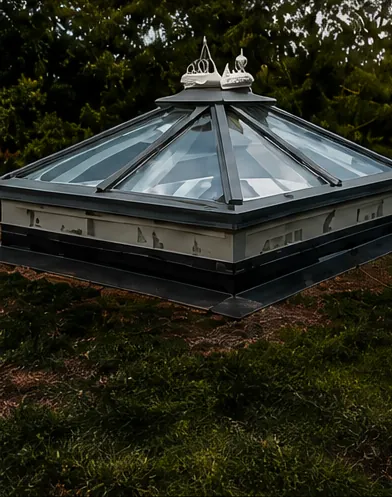 Conservation rooflights
For roofs in or beside the town centre designation, using a slim profile with one central glazing bar so the slope stays quiet.
-
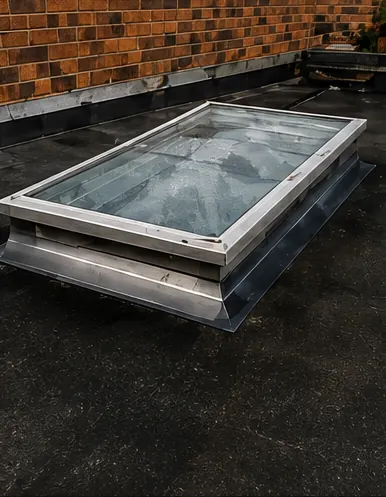 Misted rooflight replacement
For the flat-roof domes and lanterns that have clouded between the panes, replaced on the existing kerb when the timber is sound.
-
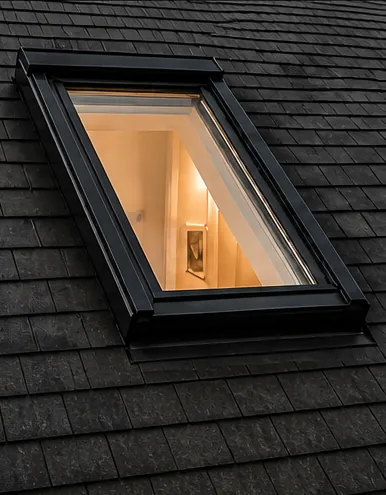 Roof windows
For terraced and semi-detached lofts, framed into the slope once the rafters and any later steelwork have been located.
-
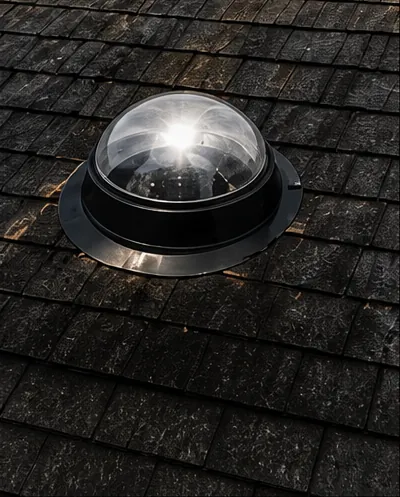 Sun tunnels
For landings and bathrooms under a roof slope with no room directly above, lit through the loft by a reflective tube.

THE FOX BROADSHEET · BEDWORTH
Twenty pits, one precinct and a rebuilt church
Bedworth, in Warwickshire, is a market town belonging to the borough of Nuneaton and Bedworth. It sits between Coventry, five miles to the south, and Nuneaton, three miles to the north. Its roofs follow its history closely. Coal mining on the Warwickshire coalfield is recorded in the area as early as the 13th century and grew to a large scale during the Industrial Revolution, and ribbon weaving and textile work overspilled from nearby Coventry. By 1730 the town was described as containing 260 houses, having recovered somewhat on the strength of local coal.
The scale of the later boom is hard to picture. In 1939 there were 20 pits in the area, producing over 5.8 million tons of coal. The last colliery in Bedworth, Newdigate, closed in 1982, and Coventry Colliery on the edge of town followed in 1991. Housing for that industry went up over many decades and in many hands, so a street of homes here is rarely the single, uniform rank that a roofer finds in a planned estate. Neighbours can have different roof pitches, different coverings and different timber.
The but
Two houses that look alike from the pavement may have been built or altered in quite different ways.
The way in
We survey each loft and each flat roof on its own merits, then price from what we found. The fixed quote is written for that roof and states the product, its size and the spot for the opening.
The centre tells a second story. The majority of the town centre was redeveloped in the 1960s and early 1970s, in the architecture of that period, as a pedestrianised shopping precinct. Behind that is the church, whose current building dates from the late Victorian era: it was rebuilt between 1888 and 1890 out of Runcorn sandstone, at a cost of £8,000 raised by public subscription. The older and the newer sit close together here, and a rooflight proposal has to be written with both in view.
A coalfield town also leaves its mark below the roofline. Ground that has been worked can move, and old extensions sometimes show it as a crack at a junction or a roof line that no longer runs true. We do not pass judgement on the structure. We look at how the opening will sit against a roof that has settled, and where the line is out of true we frame the new unit square to the glass and not to the wall. A small adjustment at the kerb or the lining is cheaper in effort than a window that never quite sits right, and it is part of the survey.
People in Bedworth live in places with names that carry the town's past: Coalpit Field, Mount Pleasant and Collycroft are all recorded as suburbs between 0.4 and 1.2 km from the centre point. We list them not to claim any particular roof type for each, but to say that the survey is local, and that we would rather learn a street by walking it than assume what the roofs are like from a map. We will come to a house in any of them, and we expect to find that the street has its own habits.
Canals, the Sowe and what glass has to survive
The land around Bedworth is cut by water. The River Sowe rises in the town and flows through Exhall and on to northern and eastern Coventry before joining the Avon south of Stoneleigh, and the mapped water lying inside 1.5 km of the centre includes the Coventry Canal, Wem Brook, the River Sowe and the Ashby-de-la-Zouch Canal. None of that touches a rooflight directly, and we mention it only because the setting shapes the weather a roof sees. What it does is put some Bedworth houses close to damp ground and open sky, where condensation, moss and leaf fall on a flat roof are all more likely to be the cause of a call.
The cloudy dome on the back extension
A misted rooflight is one where the edge seal has given way, so moisture has got into the gap and cannot get out. It looks like a permanent smear on the inside of the glass. It is not a cleaning problem, because the cloud is between the layers. On a flat roof we look at the kerb first. If the timber is sound and high enough, the unit lifts off and a new one is sealed into the same upstand. If it has rotted, we rebuild it before the new glass goes on, and the quote says so.
| Part | Why it matters |
|---|---|
| Kerb timber | Sound wood holds the seal |
| Kerb height | Water must clear the glass |
| Roof fall | No pooling at the frame |
| Old fixings | Decides a clean lift-off |
Daylight is easy to under-value until a room has it. A kitchen at the back of a terraced house is often the darkest room in the building, because the only glass is a window at the far end and a neighbour's wall stands outside it. A rooflight over the worktop changes that, and it changes the evenings as much as the mornings, since the sky stays pale long after the street has gone dim. The same is true of a landing: one sun tunnel can light a stairwell that has relied on an electric bulb all day.
Pitched roofs raise a different set of questions. A roof window goes between the rafters, and a loft that has been boarded and used for years may hide extra timber or a later steel beam. VELUX names its sizes with a letter and a number: MK04 reads as width code M and height code 04. We put the code on the quote, which keeps everyone clear on the exact product.
Bedworth's good road links help the practical side. The town lies immediately north of the M6 at junction 3, with several slip roads onto the A444 dual carriageway bypass, while the B4029 runs through it along with the B4113. There is a railway station, Bedworth, close to the centre, and two historic stations nearby have closed: Hawkesbury Lane, in 1965, and Bulkington, in 1931. None of that bears on skylights, but it means we can get to a Bedworth address without trouble and plan a day of roof work around the weather.
A reader asks
Can an old lantern or dome be swapped for something with better insulation?
Often, yes, on the existing kerb, if the kerb is sound. A modern unit with better glazing will lose less heat, and Part L allows a rooflight in an existing home no worse than 2.2 W/m²K. The new unit has to be sized and fixed to suit the upstand, so we measure it before we promise anything. See our pages on energy efficient rooflights for what the options look like.
The borough council, the centre designation and Class C
Nuneaton and Bedworth Borough Council handles planning in the town. A house rooflight is normally permitted development, with no application needed provided the glass satisfies the Class C conditions. Class C asks three things of the glass: 150mm of projection at the very most, nothing standing higher than the ridge, and, for a pane on a side slope, obscure glazing fixed shut unless any opening sash sits over 1.7m above floor level. For the long version, read skylight planning permission and building regulations, our guide for owners.
The register gives Bedworth Town Centre its conservation area, in force from 1 January 1988, and counts six listed buildings in it (Grade II*: two; Grade II: four). Living in a conservation area leaves the Class C allowance alone. Article 4 directions are the exception, and only the council can say if one applies at your door. Listed buildings sit outside the allowance altogether: consent comes before any new opening, however small. Flats and maisonettes never had householder allowances, so they start with an application.
A reader asks
Our terrace is a few streets from the centre. Do we need to worry about the conservation area?
Only if the house sits inside its boundary, and that is a question of the map, not the distance. The register records a boundary around the centre, and the council can confirm whether an address falls within it and if an Article 4 direction touches it. If you are outside it, the normal Class C conditions apply. We ask for the postcode on the quote request so we can look before the survey.
Turning a loft into a bedroom brings fire safety in. Approved Document B's credit for an escape window ends at 4.5m above the ground, and a two-storey house converting its loft is expected to build a protected stair, not lean on a roof window. England has no Building Regulations rule on daylight in houses, so the case for a rooflight is comfort and use, and we size the glass to the room.
Every job starts with a free survey. Afterwards you get a quote with a fixed price, in writing, and ten years of workmanship guarantee cover the finished work. Photographs sent by WhatsApp let us come prepared, and the quote request is where to begin.