- 01A conservation area at the town centre
- 02Listed roofs that need consent first
- 03Ordinary lofts beyond the centre
- 04Back extensions that never saw the sun

Over the county line in North Northamptonshire: south-east of Leicester by 22.9 road miles, roughly 37 minutes behind the wheel
Skylights and rooflights in Rothwell
A Northamptonshire market town with a designated centre, a ridge above the Ise Valley and plenty of ordinary roofs that want more daylight.
Or call 0116 430 0516
Ridge town, protected core

The conservation area at the town centre holds 27 listed buildings. A roof there begins with a question about consent and only then about glass, so we read the listing before a tape comes out of the van.
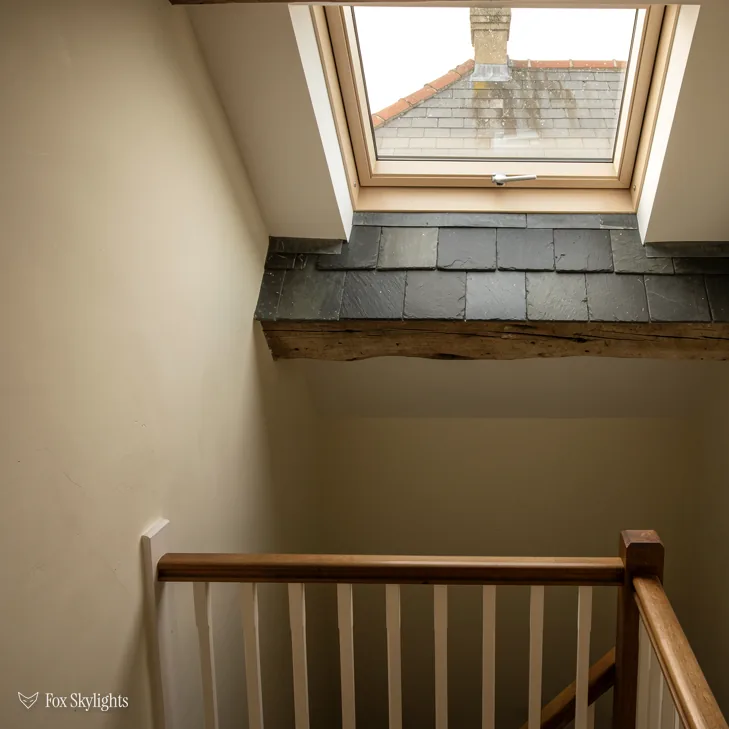
Beyond the centre the roofs are everyday ones, with lofts that run the length of the house. A roof window fitted between the rafters can light a bedroom or a work room without changing how the street looks.
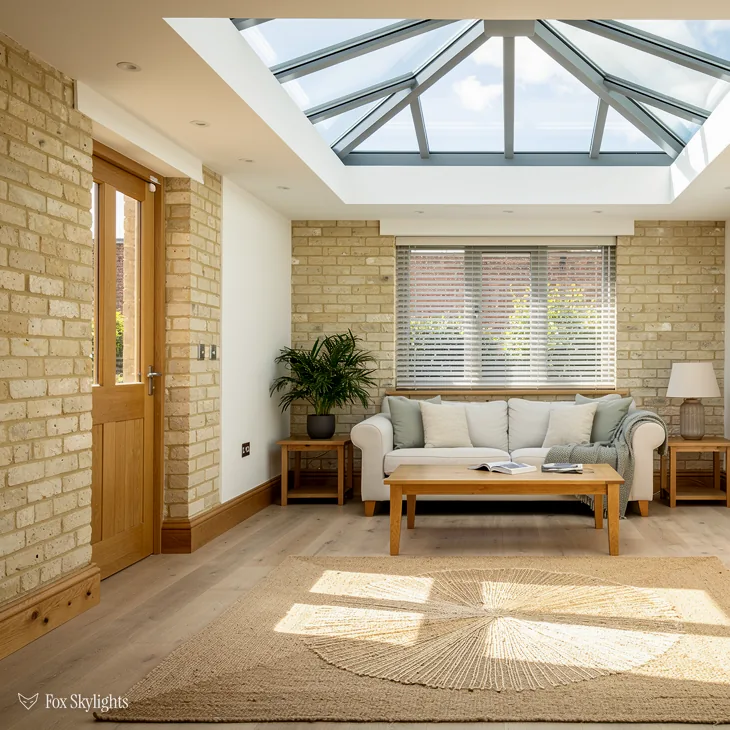
At the newer edges of town, a rear extension is often glazed at one wall and dim at the other. A lantern or flat rooflight over the middle of the ceiling brings in light that a side window never reaches.
What we would price for Rothwell roofs
-
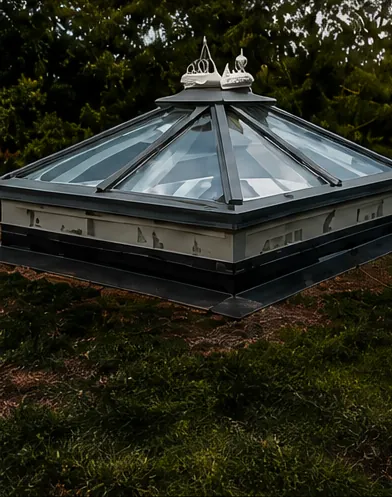 Conservation rooflights
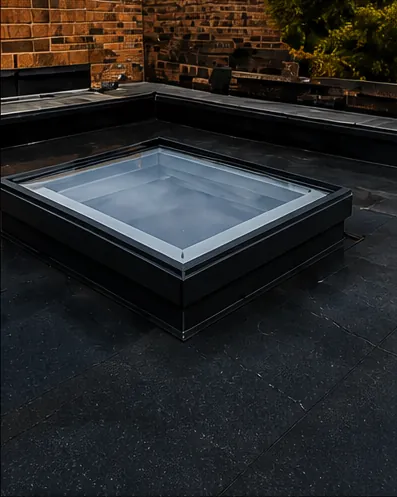
For roofs in the designated centre and next to a listed neighbour, a slim low-profile frame that lies close to the covering.
-
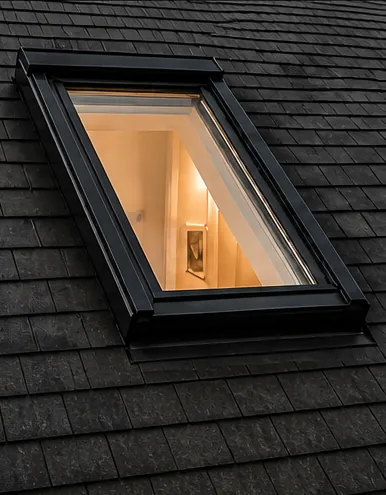 Roof windows
For the lofts of ordinary houses beyond the centre, positioned once headroom and the rafter spacing have been measured from inside.
-
 Roof lanterns
For extensions built out behind a house, a glazed crown over the middle of the room in place of one window at the far end.
-
 Energy efficient
For a slope facing open ground and the ridge's wind, glazing picked to hold warmth in as well as let daylight through.
Nearby
Neighbouring towns and villages on both sides of the county line are covered too; pick any of them below to see how its roofs differ.

THE FOX BROADSHEET · ROTHWELL
Twenty-seven listings and a Northamptonshire council
Rothwell is a civil parish and market town, and its planning decisions rest with North Northamptonshire Council, not with anyone in Leicestershire. That council takes any application for your roof and any query about consent. It matters here because Rothwell has a designated centre of the kind where such questions come early rather than late.
In the national planning register you will find a conservation area named for the town, designated 23 March 1978 and drawn around its middle. It records 27 listed buildings inside the boundary: a pair at Grade I, a single Grade II*, and twenty-four more at Grade II. The Monday market is held in the town, and the Rowell Fair takes place on the Market Hill.
Outside the listings the picture simplifies. Class C of the 2015 order treats a house rooflight as exempt from any application once three tests are passed. Nothing may stand proud of the slope by more than 150mm. Its top edge must sit under the roof's summit. And a pane in a side-facing plane must be frosted and fixed, with the exception of an opening part that sits above 1.7m from the floor. Flats are outside the householder rights altogether. The planning and Building Regulations guide goes through the rest.
A reader asks
Our road may sit just inside the Rothwell boundary. How do we know?
Send us the address. We check it against the register, then confirm with the council, because a boundary on a map does not always follow the line a street seems to draw. For an unlisted house inside the area, Class C normally holds. For a listed one, consent leads. Either way you hear the position before any slate is touched.
Building Regulations are a separate matter, and we handle them. If the roof opening falls under notification, ours is the job of sending the notice, whether it goes to the local authority or to a private body, and the sign-off is filed with your records once the work is finished.
The sums on a listed roof are different from the sums on a plain one. Time goes into the application, the drawings and the wait for an answer, and the work itself is slower because every piece is fitted carefully. We would rather say so at the start than surprise you in the middle. If the decision is no, we look at what else could light the room, for instance a rooflight on the other pitch, or a sun tunnel, which needs only a small opening.
Think of the register as a starting point rather than the last word. It can be behind the council's own files, and a dated entry may not show every change to a listing. That is why a quick call to the planning desk is part of our process on any address near the centre, and why we put what they say into the quote notes.
A ridge, a valley and the ironstone years
The town stands on a ridge above the gentle Ise Valley, and the recorded history is full of what the hill has seen. The church holds one of only two known bone crypts, or charnel houses, in the country, and the remains of around 1,500 people lie in it. Later, between 1920 and 1962, ironstone was dug from large, shallow pits to the south-east, and a narrow-gauge steam railway carried it to the ironworks north of Kettering. The workings have left nothing on the roofs.
Standing on a ridge changes how a roof should be treated. Weather arrives from open directions, so a rooflight has to cope with low sun, driven rain and a bright sky inside a single afternoon. We choose the glass for the exposure, and on a windy slope the flashing is dressed more generously than on a sheltered one. A ridge-top roof is also seen from below. From the valley side a badly placed window reads as a patch on the slope, and a well-placed one passes unnoticed.
The but
A protected centre does not mean the back slope of every house has to stay dark.
The way in
Where consent allows, a conservation rooflight goes on the rear pitch, out of sight of the street, with a thin frame set flush so the roofline stays as it was.
Over an extension the job is a different one. A roof lantern stands on its own kerb with glazed sides and a ridge, and it can be cut to suit the room. Proportion matters more than anything: too tall, and it looks like a conservatory dropped onto a kitchen; too shallow, and it gives less light than a good flat rooflight would. We work the height out from the width of the room and the ceiling, and draw it before we order.
Where a house is old enough to be listed or to sit in the designated area, a conservation rooflight is the form we reach for first. The frame is slim, with one glazing bar running through the middle, and the glass sits close to the covering rather than on a deep upstand. It is meant to look like the small roof lights that earlier builders would have set into a slope.
Comfort in a loft room depends on the glazing. An energy efficient rooflight has a better insulating pane and a warmer frame, which keeps a room usable in January as well as July. On a ridge-top house with open aspects, that is a sensible choice, and under Part L the glazing has to meet a heat-loss standard anyway.
Not every house on the ridge is old. Where a house is more recent, the loft is usually a gentler proposition. Roof timbers are regular, the covering is uniform, and a roof window drops in between the rafters with few surprises. Even then we measure from inside the loft before we agree a position, because a water tank, a flue or a joist in the wrong place changes where the opening can go.
Flat roofs turn up here too, mostly on garages and single-storey extensions at the back. A flat roof rooflight on an upstand brings daylight into a room beneath, and the kerb needs to be built so water runs off it. If an old rooflight on one of these roofs has misted up between the panes, it can be replaced with a modern sealed unit; the opening is already there, and the new one can be sized to match.
Reaching Rothwell from the Leicestershire side
South-east of the city, 22.9 road miles and some 37 minutes' driving bring you to the town. Wikipedia places it 4 miles north-west of Kettering, 7 miles south-east of Market Harborough and 8 miles south-west of Corby, so the job fits into the same trip as our Market Harborough and Kettering work. Close by run the A14, then the B576 and B669 as well, and the mapping data lists no open station inside 2 km.
The market runs every Monday, and a fair known as Rowell Fair takes over the Market Hill in the week after Trinity Sunday. If you live around the Hill, the stalls and the crowds will be on your doorstep once a year.
The first conversation is always about the room. What is it for, what is wrong with its light, and how tall is the ceiling at the spot where you imagine a window? Photographs help. Send a few of the room together with the roof to WhatsApp 07880 284133, and give us the address so we can look at the register before we visit.
On the day itself, expect a small crew, dust sheets across the room and a tidy finish. We protect the floor below, open the roof from outside, fit the frame and the flashing, then line the opening inside so the reveal is clean and the plaster is sound. Our workmanship is guaranteed for ten years, and the paperwork for that arrives when the job is done.
Think about the morning and the evening too. A slope facing south-east, as many in a town on this side of the ridge may, gets early light that can warm a bedroom before you want to be up. A blind that fits the frame solves that cheaply. Facing the other way, a roof window gives steadier, cooler light, which suits a study. We note the aspect at the survey and say plainly what each position will do.
A reader asks
Will you work on a roof inside the conservation area?
Yes. We fit conservation rooflights on roofs in designated areas wherever consent allows. The first step is the address check. If a listing means consent has to come first, we explain what the application involves and what it would need to show. Once the position is clear, the survey costs nothing and the price we give you afterwards is fixed. The quote form is the place to begin.