- 01A village cut in two by the A444
- 02Lofts under the National Forest sky
- 03Once the middle of the country
- 04Close to the old mining villages

Overseal lies west-north-west of Leicester, 26.8 miles away on the road: about 42 minutes at the wheel
Skylights and rooflights in Overseal
The A444 splits this South Derbyshire village, the National Forest surrounds it, and the roofs are ordinary ones where a loft is usually the place to start.
Or call 0116 430 0516
Overseal's roofs under the trees
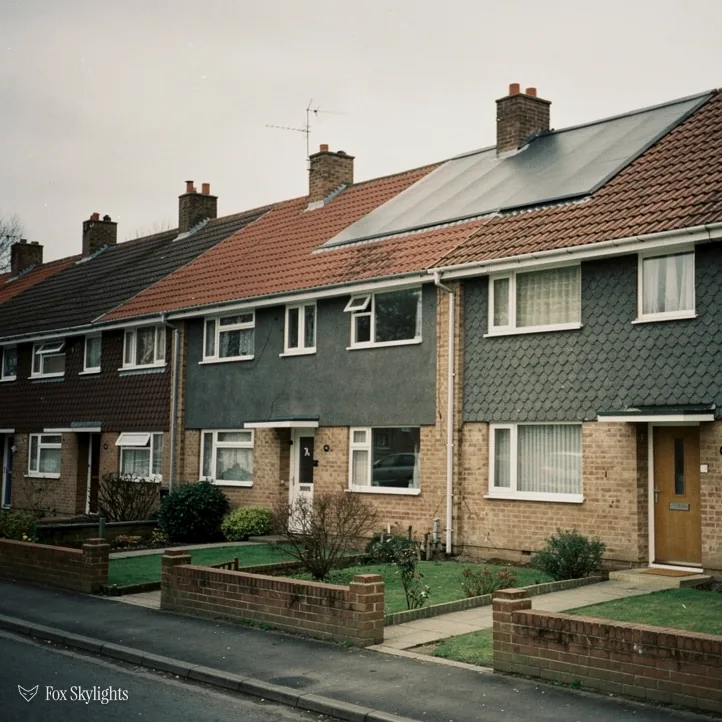
Overseal sits in the heart of the National Forest, and a house with trees nearby loses daylight early in the afternoon. A rooflight lifts the light above the branches and into the rooms that need it.

Village houses along the busy A444 are lived in, loved and often left alone above the bedroom ceiling. A survey of the loft tells us whether a roof window can go in between the rafters.

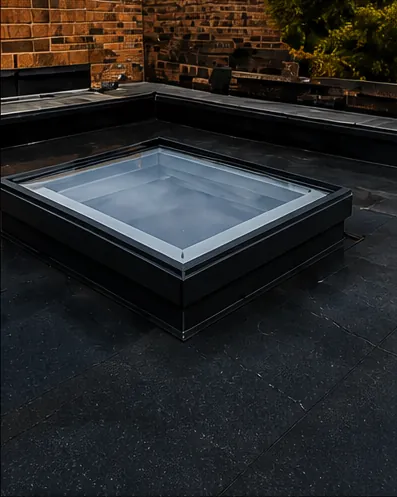
A single-storey extension under a flat roof is where a kerb-mounted rooflight earns its keep. The glass lights the middle of the room, which a wall window never quite reaches.
Choosing for Overseal homes
-
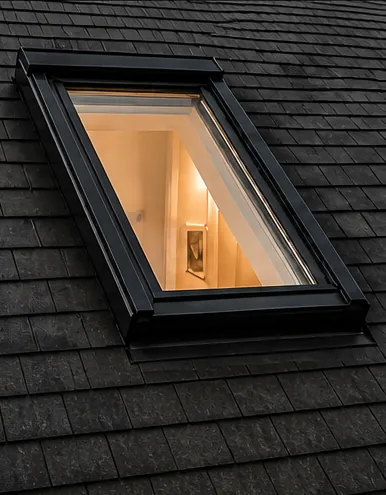 Roof windows
For loft rooms in village houses, set between rafters once headroom and spacing have been measured.
-
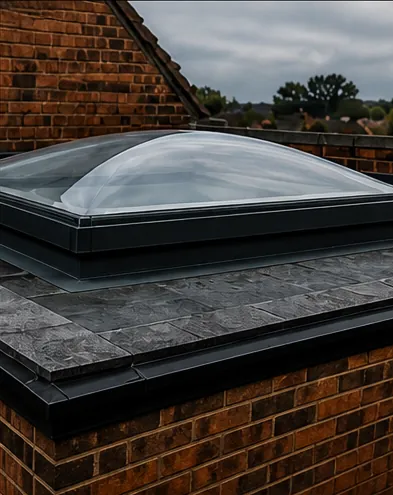 Flat roof rooflights
For single-storey extensions and kitchens with flat roofs, on a kerb shaped to shed rain.
-
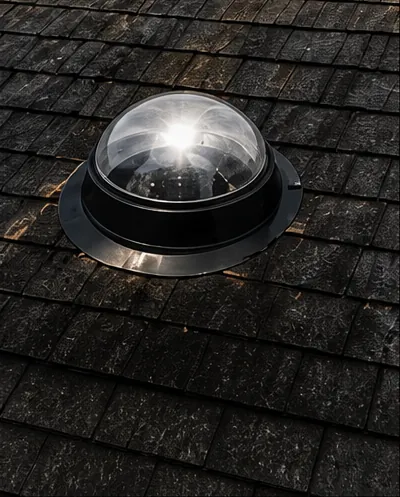 Sun tunnels
For hallways, landings and bathrooms that have a roof above but no space for a full window.
-
 Energy efficient
For homes beside a busy road and a wide sky, where good glazing keeps both heat and noise in check.
Nearby
Overseal sits among the South Derbyshire villages and the edge of Leicestershire. Close neighbours are listed below, each with a page.

THE FOX BROADSHEET · OVERSEAL
The village the main road runs through
South Derbyshire holds Overseal, a village and civil parish three miles south of Swadlincote, five miles west of Ashby-de-la-Zouch and thirteen south-south-west of Derby. The busy A444 national route bisects it, with Burton upon Trent seven miles to the north-west and Nuneaton some eighteen miles south. Woodville Road, leading north-east from the A444, was once the B5004 and is now a minor road. For a fitter the geography is handy: the main road gets us to the village, and the quiet streets behind it are where the work is.
In 1971 Overseal was said to be the population centre of Britain, with an equal number of people living north and south of it, and the same east and west. It is a nice piece of trivia, and a rather good argument for a skylight: if the whole country balances here, then a lot of households have the same dark landing. The village is a modest place, the sort that has never advertised itself, and its houses reflect that. There is no showpiece roof to match, only a street of sound ones. They are ordinary homes, and ordinary homes are where a dark landing goes unnoticed for years.
The village sits in the heart of the National Forest, and that matters more than it sounds. Trees mature, and the sunlight that reached a back bedroom in one decade can be filtered through branches in the next. A window in a wall looks at the trees. A rooflight looks over them. In wooded country the answer is simple: take the light from above, where the leaves cannot reach.
A reader asks
We live in a plain village house near the A444. Is there anything a rooflight can add?
Plenty. A plain house often has a plain loft and a plain landing, and both are good candidates. A roof window can turn a loft into a proper room, and a sun tunnel can light a landing from the roof without any building work in the rooms below. Our page on sun tunnels shows how the tube works.
Winter is the other test for any glass in a roof. Warm air rises, and a poorly specified unit at the top of the house is where the heat leaks out first. That is why the Part L figures exist, and why we quote a glazing specification that meets them. A well-made rooflight with a good seal and a warm-edge spacer is a different object from a cheap dome, even though both let in light. Put the two side by side on a January morning and the difference is in the draught.
Noise is the second thing on a busy road. An ordinary rooflight lets sound in as readily as light, unless the glazing is chosen with care. At the survey we talk through pane thickness, frame sealing and where the unit sits relative to the traffic. A room at the back of the house, away from the A444, makes a better bedroom window than one at the front. The reverse can be true for a landing, where traffic matters less than getting light to the stairs.
South Derbyshire, and a register with no entry
South Derbyshire District Council takes the planning decisions. For an ordinary house the 2015 rules put a rooflight under Class C of permitted development, and the limits are brief. Glass may sit 150mm above the roof surface and no higher. The ridge, or the highest part of the roof, is a lid the glass must stay under. Side-slope panes are frosted and fixed, with one exception: an opening part that sits beyond 1.7m from the floor.
The national planning data names no conservation area within a kilometre and a half of Overseal. It adds a warning: some councils are still uploading, so the entry means none recorded and nothing more. A blank is a prompt to check, not a green light. The council is asked about your address, and the answer goes in with the quote. If a conservation area or an Article 4 direction turns up, the plan adjusts and you hear first.
A reader asks
Do I have to tell anyone before a roof window goes in?
Cutting a roof open is building work, and the Building Regulations apply even when planning does not. Where a job is notifiable, we send the notice, choosing the council or a registered approver. Older homes are held to a glazing standard: a roof window with a rating of B, or alternatively 1.4 W/m²K, with rooflights held to 2.2 W/m²K. The fuller account sits in our long planning guide.
One more regulation is worth knowing for loft rooms. Anyone planning a bedroom in the roof meets one more rule. Only storeys reachable within 4.5m of the ground get credit for an escape window, so a converted loft on a two-storey house relies on a protected stair instead. We raise it at the survey so the glass is not given a job it cannot do.
| Your home | First step |
|---|---|
| Detached or semi | Class C, then Building Control |
| Listed house | Listed building consent |
| Flat above a shop | Planning application |
None of these checks holds up the survey. We visit while the council is answering, take the measurements and write the quote, so that the date you can order is the date the answer arrives.
Mining villages, new woodland and the survey
To the south-east of Overseal lies Donisthorpe, a former mining village in Leicestershire, and the border country here has always shared its roads and its working lives. That shows in the way the villages run into each other. A day in Overseal can take in a neighbour in Moira, Woodville or Swadlincote on the same day, and the survey tape comes with us. Each of those places has its own page, and each has its own roofs.
One small change nearby is worth noting. The Navigation Inn on Spring Cottage Road, over the border in Leicestershire, was demolished in 2015 to make way for elderly accommodation lodges. A lodge for older residents has its own needs from a rooflight. Reach matters more than view, and opening units that are operated by remote control or a wall switch spare anyone from climbing a stool. Our page on electric opening rooflights explains how they work, and how they close themselves when it rains.
A survey, step by step
The first visit is free. We go into the loft or onto the flat roof, measure the rafters, look at the covering and ask what the room is for. We photograph the roof and make a note of anything that would move the window. After the survey you receive a fixed written quote. When you accept, we agree a fitting date, and the work is done to the 10-year workmanship guarantee.
On the day, we protect the room below, open the roof, fit the unit and finish the flashings and the lining. A single roof window or sun tunnel is a short job. A lantern or a flat rooflight on a new kerb takes longer, and we say how long before we start. We leave the room clean, and we show you how the unit works if it opens.
A reader asks
My rooflight has gone cloudy between the panes. Does the whole thing need replacing?
Not always. A grey film between the panes means the seal has failed, and in many cases the sealed glass unit alone can be changed while the frame and flashing stay. We check the frame and the surrounding roof at the survey to see if that is true for yours. The details are on our page about replacing misted rooflights.
Out here is 26.8 miles of road from Leicester, so a visit is a proper trip. We plan around it, and where several jobs sit close together we group them. To start, ask for a free survey and tell us which room is dark. If it is easier, send a photo to WhatsApp on 07880 284133. Either route reaches a person who will come out to the roof and find the way in.
The size of the opening deserves a moment of its own. Standard roof windows carry a short size code, MK04 for instance, in which the letter reads as the width and the digits as the height. The size you can fit depends on the rafters, and the size you want depends on the room. We reconcile the two on the roof, with a tape, and put the answer in the quote so it can be checked against what arrives.
Think about the view you want, too. In a forest village, the sky above is often full of movement: branches, birds, weather. A roof window can frame that without exposing you to the street. A fixed rooflight over a stair frames it at a distance. Whatever you choose, we mark the position inside the room first so that you can see what the window will show before any tile is lifted. Stand under the mark, look up and tell us if the spot should move a hand's width either way. That costs nothing at this stage and a good deal later.