- 01A ridge above the Avon valley
- 02An old village with a 1960s estate beside it
- 03Avon Pastures lofts from the 2000s
- 04A railway that passes and never stops
Over the border: 24 road miles from Leicester, south-south-west, in about 36 minutes
Skylights and rooflights in Long Lawford
A ridge village on the Warwickshire side of Rugby, with three layers of housing and a different way into the light for each of them.
Or call 0116 430 0516
Old village, big estate, newer close
Houses from before the 1960s estate sit in the original village on the ridge. Their roofs differ one from another, so each gets a separate look at the timbers before we say where a window can go.
The 1960s estate to the east made the village a suburb of Rugby, and its houses were built in numbers to repeated designs. If we have been in one loft, we know a good deal about the next, though we still check each.
Avon Pastures went up in the 2000s beside the A428. Those roofs are young and tightly framed, and they often have a kitchen or garden room off the back where a flat rooflight earns its keep.
Rooflights that suit a ridge village
-
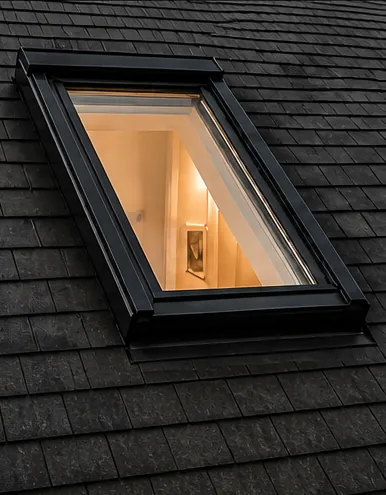 Roof windows
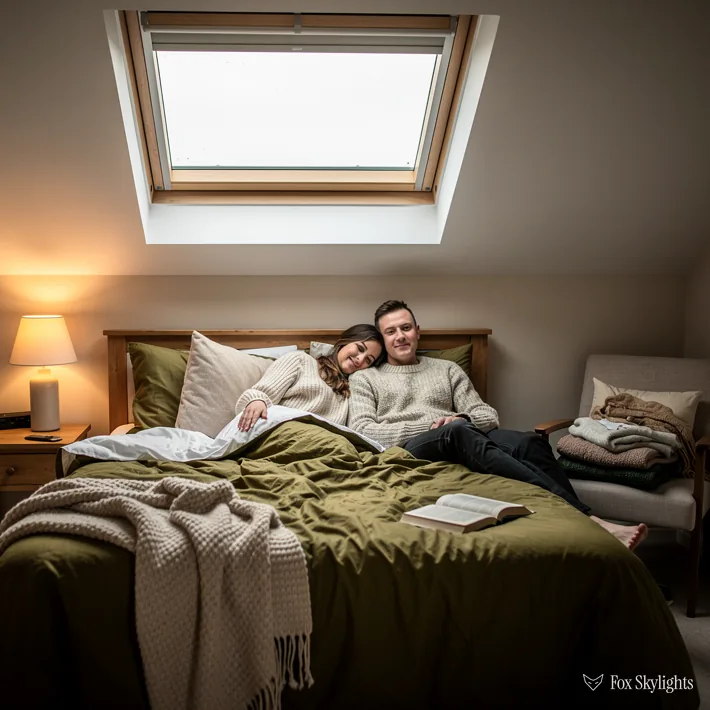
For the 1960s estate lofts, where the same house type repeats and a window between the rafters brings the room under the slope into use.
-
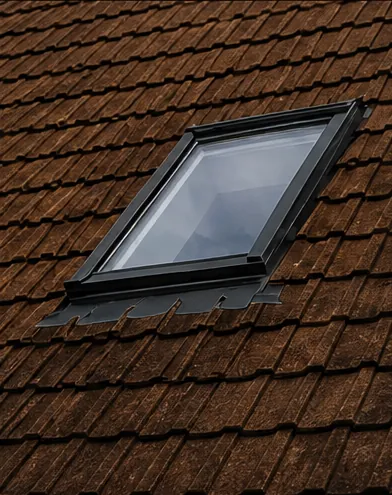 VELUX windows
For the Avon Pastures roofs, whose close-set frames suit stock sizes that slot between the timbers.
-
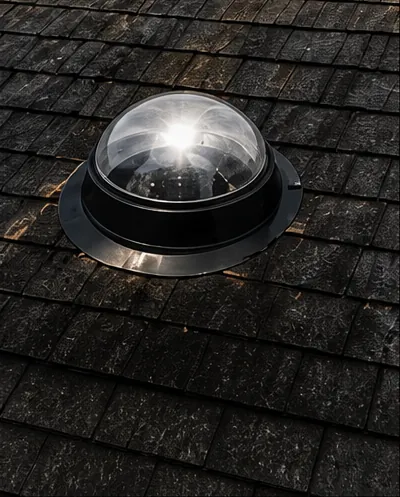 Sun tunnels
Dark halls, landings and bathrooms inside estate houses, where no roof slope sits directly overhead.
-
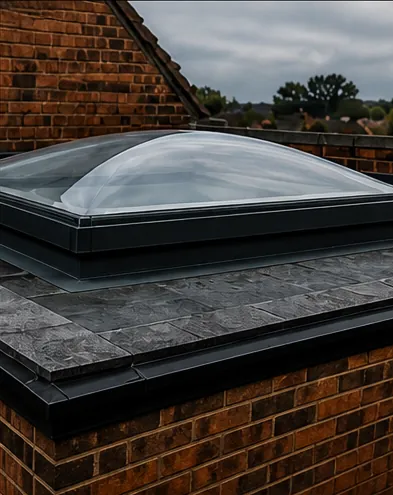 Flat roof rooflights
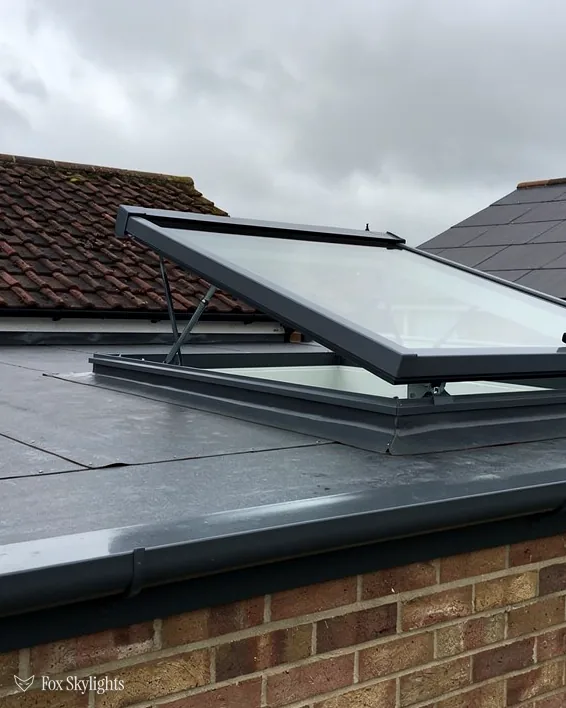
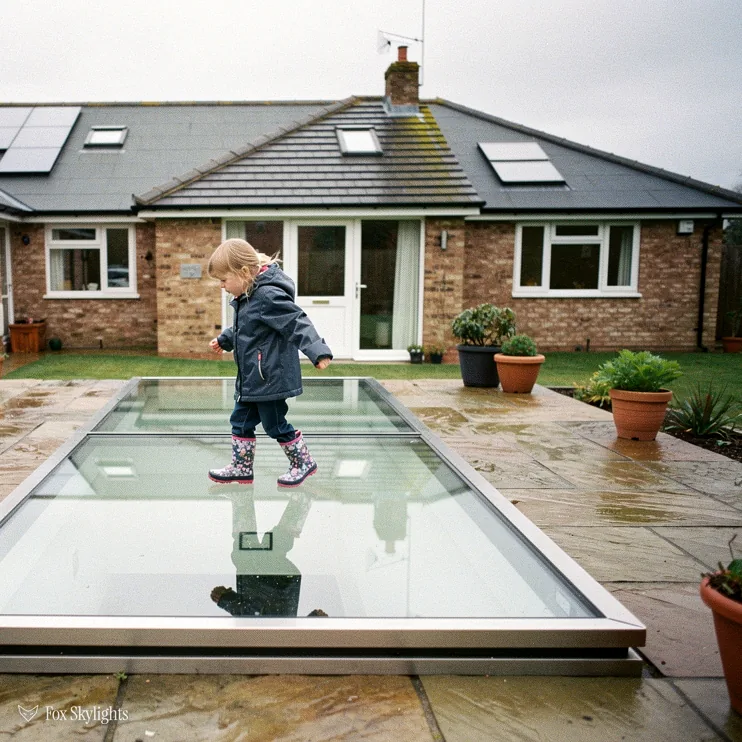
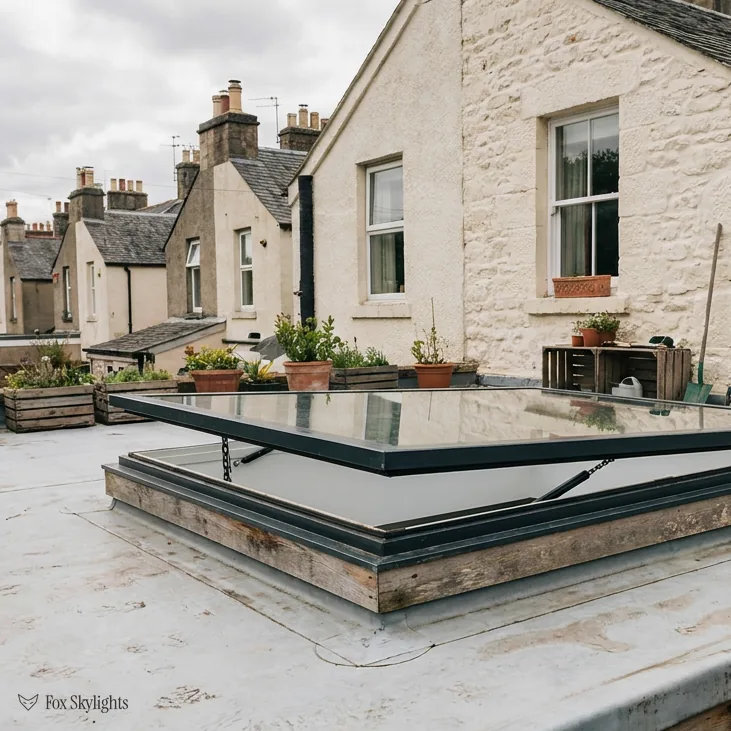
For back extensions and garden rooms, the places in a village of this age where a flat ceiling leaves the centre of the floor in shade.
Nearby
Rugby itself and the villages around it are on our patch too, and every chip below leads to a page about that place's roofs.

THE FOX BROADSHEET · LONG LAWFORD
The ridge, the old lane and the sixties estate
Long Lawford stands on a ridge with the valley of the River Avon below it to the north. It counts as a village, with its own civil parish, in Rugby borough, Warwickshire, about 1.75 miles (2.82 km) west of Rugby town centre. Long Lawford and its neighbour Little Lawford were once both part of the old parish of Newbold-on-Avon, and in the 19th century each became a parish of its own. Because of the ridge, a north-facing slope looks down towards the river, and a rooflight on it receives steady, even light with little direct sun.
The village changed in the 1960s, and the change is still visible on the map and in the lofts. A large housing estate was built to the east of the old village, and the effect was to turn Long Lawford into what Wikipedia calls an effective suburb of Rugby. For our purposes, the interesting thing about an estate of that kind is repetition. An estate of that kind tends to repeat a few house types along its streets. After we have seen how one is built under the tiles, the one next door holds fewer surprises.
That head start has limits, which is why we never skip the survey. Owners alter things. A loft that was boarded in one house is bare in the next; a chimney breast removed downstairs may have left its mark in the roof space. When we go up the ladder we are looking for what has changed since the builder left, because that decides how large a roof window can be and where it can sit.
The but
A loft in a 1960s house is often used for storage, and the owners are afraid that a skylight means emptying it.
The way in
We clear only the strip beneath the opening and put dust sheets over the rest. The rest of the loft stays as it was, and the floor is covered before any tile comes off.
Houses of that period often have a flat-roofed garage or a porch tacked on, and later owners may have added a flat-roofed kitchen. The ceilings in those rooms are low and the daylight is thin. A sun tunnel is the right answer for a hall, landing or bathroom with nothing but loft space above it: a small dome on the roof, a reflective tube through the loft, and a round diffuser in the ceiling. The result is daylight with no need for a window in the wall or a full opening in the roof, and the work in the loft is mostly a matter of running the tube clear of the joists and the insulation, which is neat, quick work for a tidy pair of hands.
A reader asks
Will a sun tunnel give enough light for a windowless landing?
It lights a landing well in daytime, although it does not match a full rooflight over the same space. Length matters: a short run through the loft carries more light than a long one with bends. We measure the distance from the ceiling to the roof before suggesting one, and say if a different product would suit the space better.
One last point about the ridge. Because the village sits high, rain can arrive sideways. A rooflight should be flashed and sealed to cope with that, and we take care over the flashing at the upper edge of the frame. It is dull work, and it is the part that keeps the room dry in a gale, and since the village sits where the wind has a free run at it, we do not skimp there.
Avon Pastures, the Caldecotts and a Celtic village
The village grew again in the 2000s with a development called Avon Pastures, just off the A428. New roofs follow modern habits: they are framed in factory-made triangular trusses and spaced tightly. The gaps between them are narrow and the diagonal braces are there for a reason, so a skylight in such a roof is chosen to fit the gap and does not ask the frame to move. A pair of narrower VELUX windows side by side often gives more light than one wide window would, and it leaves the structure alone.
The village has older layers too. The village still has two pubs, one of them the Caldecott Arms, which keeps the name of the Caldecotts alive although their house has changed hands. Excavations of a Celtic Iron Age village turned up an Iron Age sword, a sign that people have lived hereabouts for a very long time. Our own interest is more modest. We want to know how old a roof is, because that tells us what timber we will find under it.
| Housing | What we look for | Usual product |
|---|---|---|
| Old village houses | Uneven, hand-cut timber | Slim rooflight in a gap |
| 1960s estate | Alterations since built | Roof window between rafters |
| Avon Pastures | Truss spacing | Pair of narrow windows |
| Hall or landing | Distance to the roof | Sun tunnel |
| Back extension | Fall of the flat roof | Flat rooflight on a kerb |
On the north slopes that face the Avon valley, the light is soft and steady, and a rooflight there rarely overheats a room. On a south-facing slope the opposite holds, and the glass specification becomes the main question. Many of the garden rooms and extensions in a village of this age are built with a lot of glazing and little shade. Which way the slope faces is our first question, ahead of what size the window should be, and on the hot side the usual suggestion is solar control glass, which belongs to the energy-efficient rooflight range.
When we replace an old rooflight or window, the replacement must reach a minimum thermal standard under Part L. Replacements meet Part L through two published numbers: a roof window must reach 1.4 W/m²K, with the energy rating scheme's band B as an alternative route, and rooflights are judged against 2.2 W/m²K. They come off the manufacturer's data sheet, and we put them in the written quote so you can compare them with whatever else you are offered.
A reader asks
We want a bedroom in the loft of our estate house. Can the roof window be the way out in a fire?
Not on a two-storey house. Approved Document B reckons an escape window only for rooms reached by a short drop, reaching no more than 4.5m up from the garden. A loft bedroom is above that, so the guidance wants a protected stair. The roof window gives daylight and air, and the staircase deals with fire. Your building control body will want to see that arrangement.
Rugby Borough Council, the railway and the A428
Rooflight questions for Long Lawford go to Rugby Borough Council, the planning authority for the parish. The national planning data shows no conservation area close to the village. Treat that as a blank, not a verdict, because councils have not all filled in the register. We put each address to the council and do not rely on the blank.
A house comes under Class C, the 2015 rule on roof alterations, which lets a rooflight go in without an application if three limits are respected. The frame may rise 150mm from the roof plane, no more; it must stay below the peak of the roof; and anything glazed on a side-facing roof slope has to be obscure and fixed, unless the opening part is beyond 1.7m from the floor. Neither a conservation area nor its absence changes that. An Article 4 direction can, and so can a listing, which brings listed building consent into play. In a flat or maisonette there are no householder rights at all, and the owner begins with an application.
Planning is only half of it. Building Regulations look at the structure, the insulation and the weathering of the new opening. Where the work is notifiable, we lodge the notification, and it can go through the council's own building control team or through a registered building control approver working privately.
As for getting here: the village sits just north of the A428, the road between Rugby and Coventry, and OpenStreetMap shows that as the only classified road within a kilometre. The Rugby to Coventry railway runs through the village, but there has never been a station, and none is recorded within two kilometres. That does not matter to us, since we arrive by van: 24 road miles from Leicester, about 36 minutes, to the south-south-west. It is far enough that we would sooner do the survey and the quote in a single visit, so the tape, the camera, the ladder and the questions all come in one trip, and you are not asked to wait for a second appointment.
A reader asks
Do you really come all this way for a quote?
We do, and the survey costs nothing. Someone climbs up to the slopes, someone else looks round the loft, and a fixed written quote follows. Should a rooflight turn out to be the wrong answer for your house, you hear that from us before any money is committed. Ask for a visit and we will find a day.