- 01Trent Valley light, low and flat
- 02Village houses with mixed roofs
- 03Lofts that wait for a window
- 04Rear rooms facing the river meadows
North from Leicester: 29.7 miles by road, about 40 minutes
Skylights and rooflights in Burton Joyce
Rooflights and roof windows for a large Nottinghamshire village on the A612, where a river-valley setting and a mixed stock of houses set the questions.
Or call 0116 430 0516
Village roofs by the Trent
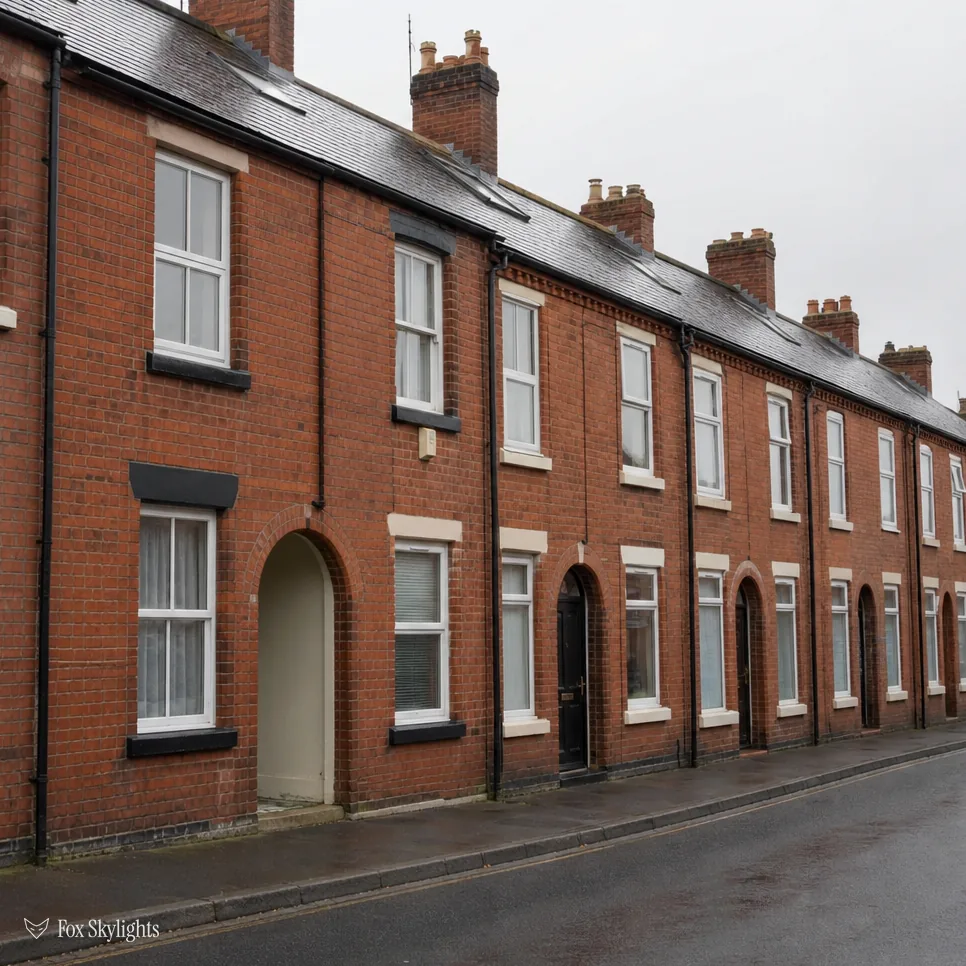
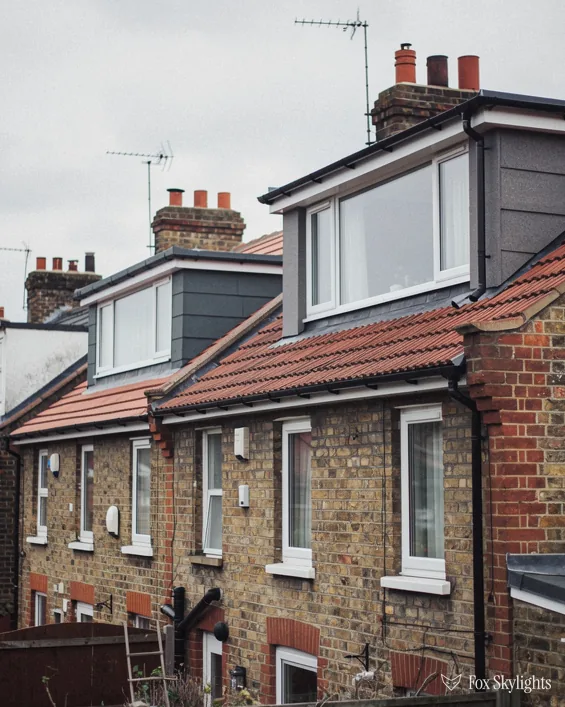
Farming came first in Burton Joyce, and then it grew in the early Industrial Revolution. Houses from different periods sit side by side, so one roof will carry rafters at one spacing and its neighbour at another, and each needs measuring in its own right.

A large village with a railway station and an A-road tends to hold family houses with lofts used for storage. A window cut between the rafters gives the household a proper room without an extension or a move.

Houses that back on to open ground in the valley have a view worth lighting. A rear extension there can use a rooflight with solar control glass, so the room is light without cooking on a summer afternoon.
What tends to suit these houses
-
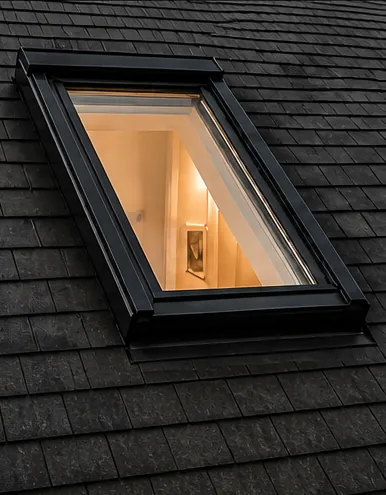 Roof windows
For storage lofts turned into bedrooms or offices, opening between the rafters and reachable from a standing position.
-
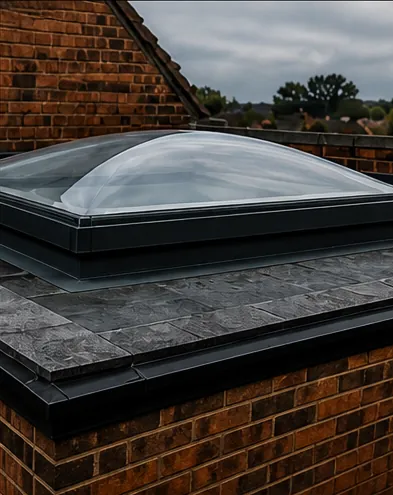 Flat roof rooflights
For flat-roofed kitchens and garage conversions at the back, on a kerb that stands clear of standing water.
-
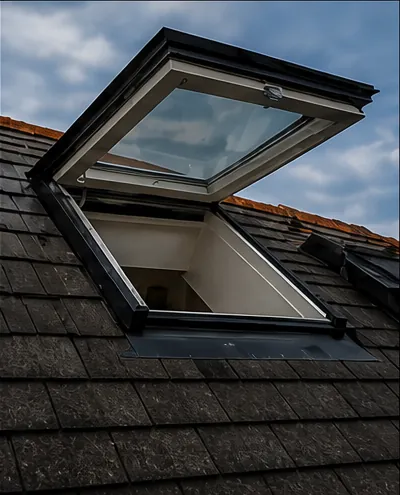 Electric and opening
For double-height rooms and stairwells, where a switch or a rain sensor operates glass that is out of arm's reach.
-
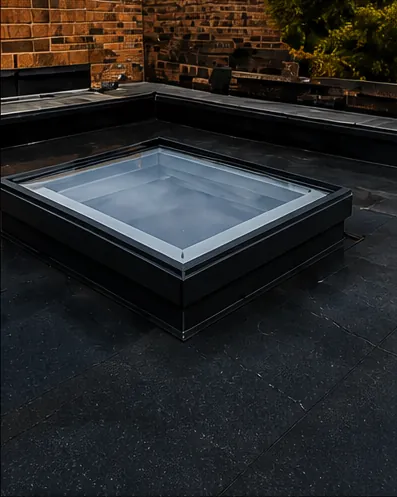 Energy efficient
For rooms that get the wind off the valley, with glass specified to keep the warmth in through the winter.
Nearby
Villages along the Trent Valley and the Nottingham fringe round Burton Joyce are covered too, each with its own page.

THE FOX BROADSHEET · BURTON JOYCE
Gedling Borough Council and the Bulcote boundary
Burton Joyce, a large village in the Gedling district of Nottinghamshire, sends its roof questions to Gedling Borough Council. With Stoke Bardolph and Bulcote it forms the Trent Valley ward. A rooflight on the back slope of an ordinary house normally needs no application, so long as the glass stays low against the slope and no higher than the ridge line. Our long guide to planning and the Regulations sets out each limit.
The conservation record needs a careful reading. The register lists a Bulcote conservation area from 1 January 1974, lying 900 metres from the centre of the village and holding 13 Grade II buildings. The name is Bulcote's, so it most likely belongs to the neighbouring settlement, and our data holds no area under the Burton Joyce name. Treat that as a blank in the records rather than a promise that nothing exists, and it is why your own address is worth checking with the council first.
A reader asks
We are near the Bulcote end of the village. Does the neighbouring conservation area reach us?
It depends on where the boundary runs, and that is a map question, not a guess. We look up your address, compare it with the area line, and tell you whether to ask Gedling Borough Council about any Article 4 direction. You get that in writing alongside the quote.
Building Regulations run alongside planning. Opening a roof is building work, so where the job needs a notice we send it, through the council or a private approver, and keep the paperwork. The unit must also reach the energy standard for existing homes. We choose by the data sheet and show you the numbers.
Where an application is needed, a clear drawing showing the unit's size, position and height above the slope helps it go smoothly. A last planning point is neighbours. A rooflight is not a window that looks sideways, but a roof window that opens in a loft can look across at the next garden if the slope faces it. We position openings with that in mind, and for a south-facing room we usually suggest a blind or solar glass from the start rather than as an afterthought. A good rule is to picture the slope from the neighbour's upstairs window: if the glass would catch their eye, move it, shrink it or tint it, and mention it to them before the date is fixed. Tell us at the survey which rooms you use in the evening and which in the morning, and we can match the position of the glass to the hours you are actually in the room.
Farm village, textile village, commuter village
The village began as a farming community. In the early Industrial Revolution it grew into something bigger, and it earned a reputation for its textile products that lasted until the 1920s. The entry for the village also records a building demolished in the 1960s, and a street close by, Padleys Lane, keeps the name. That is the extent of the record, and a made-up street or estate would do you no good. A village with more than one era of growth has more than one kind of roof, and the survey is how we learn which one is yours.
The A612 links the village to Carlton and Netherfield in one direction and Lowdham in the other, and East Midlands Railway serves Burton Joyce station, which the map places about 0.7 km from the village centre. Services run towards Nottingham, Derby, Matlock and Leicester one way and Newark and Lincoln the other. That convenience tends to keep houses in demand, and a household that likes the village and wants more space looks up rather than out. A loft conversion is the obvious answer, and a roof window is its eyes.
The but
A conversion loft needs light and fresh air, but the slope that faces the road is the one the owner least wants to alter.
The way in
We put the window in the back slope where the structure allows, and size it to the headroom on the floor, so the room works without any change to the front elevation.
The village is large enough that the houses range from compact to roomy, and the choice of window follows the house, not a catalogue. Not every loft becomes a bedroom. Some become a study, some a play space, and some stay as storage with a window added so you can see what you are storing. The test we apply is headroom. A roof window needs a clear height beneath it, and a floor that you stand on only at the ridge is a poor place for one. When the loft is too low, the answer is sometimes a rooflight into the room below, with a light shaft through the loft space, which lights the landing without any change to the loft itself. We would only suggest that where the loft is clear of tanks and trusses at the point we need, and we confirm it by torchlight before it goes in the quote. If it does not work, we say so and suggest the next best option, rather than sell you something that will disappoint.
Daylight for rooms under a loft
A hallway, a bathroom or a landing that sits under a loft rather than a slope cannot take a rooflight at all. A sun tunnel can. A small dome on the roof gathers the daylight, a mirrored tube lowers it past the insulation, and a frosted panel in the ceiling lets it into the room. It is dimmer than a window, but it ends the windowless gloom, and the opening it needs is small enough to run between joists without major work.
River air, open ground and the survey
The River Trent runs close to the village, and the mapping data lists nature reserves in the surrounding countryside: Lambley Reed Pond, Gedling House Woods and Meadows, Gunthorpe Riverside and Bonney Doles, all between two and three kilometres away. It is open, wet, edge-of-valley ground. For a roof, that translates into weather that arrives with little shelter, so flashing and sealing details matter. We form the lead or aluminium flashing to suit your actual slope, bed the frame on a proper upstand, and take care that no gap is left where wind-driven rain can find its way behind.
Open ground also means views, and views are a reason to think hard about the glass, since a room that looks out over fields deserves more than a token pane and a sun-struck room deserves more than clear glass alone. A rear extension that faces meadow or garden deserves a lot of sky, and a lantern or a large flat rooflight can give a room a ceiling of light. The same room may overheat in July, so we talk through solar control coatings, blinds and opening versions before anyone commits. An electric opening unit with a rain sensor can vent a hot room automatically and close itself when drops fall, which suits a house that is empty during the working day. Wiring is part of the quote: the unit needs a supply run to it, and we plan the route through the loft and down inside the wall so there is no surface cable to look at afterwards.
A good survey in a village like this one takes longer than a quick look from the drive. We check the roof from outside, then go into the loft and look at the rafters, the insulation, any water tank or pipework in the way, and the ceiling below. We note the orientation, because a north slope and a south slope want different glass. Then we agree a position with you in the room and mark it up before measuring for the quote. If the house has had work done before, such as a dormer, a new roof covering or an extension, we ask to see whatever paperwork you hold, because it tells us what is above the ceiling without lifting a tile. People are sometimes surprised that we spend more time on the preparation than on the cutting, but a clean fit in one visit is the result of the measuring done in the first. Whatever the age of the house, the free survey ends with a fixed written quote, and the 10-year workmanship guarantee covers the installation.
A reader asks
Can I choose the position of the skylight myself?
Yes, within what the structure allows. We will say where the rafters, trimmers and chimney breasts sit and show you the positions that work. Sometimes a move of a hand's width makes the difference between a simple fit and extra framing. For a longer look at difficult roof shapes, see our page on awkward roofs.
Fancy a second pair of eyes on your roof? Book the free survey and written quote, or message a photo and your road by WhatsApp. A 10-year workmanship guarantee covers the work, and every item is named in the quote before we begin, so the day ends with no surprises.