- 01Thirty-seven listings in the old core
- 02A village at the Trent floodplain's edge
- 03Slim glass for roofs people look at
- 04Willington station two miles off
Up the Trent valley from Leicester: 26.2 miles by road to the north-west, 45 minutes
Skylights and rooflights in Repton
A Derbyshire village with a heavily listed core: the roof gets read before the glass is chosen, and the listing gets read before either.
Or call 0116 430 0516
Repton's listed core and the rest
The conservation area dates from July 1969, with 37 listed buildings on record: six at Grade I, one at Grade II*, thirty at Grade II. For any house within it, the listing check comes before the first measurement.
Milton, about a kilometre and a half away, has a conservation area of its own with six Grade II listed buildings. A house on the edge of either may sit on one side of a boundary or the other, so we confirm the line first.
The records say little about Repton's housing, so the roof itself is the evidence. We read the rafters, battens and covering from inside the loft, and that tells us more about a house than its street name does.
What suits Repton houses
-
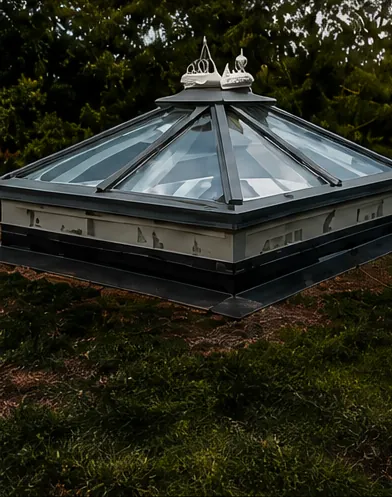 Conservation rooflights
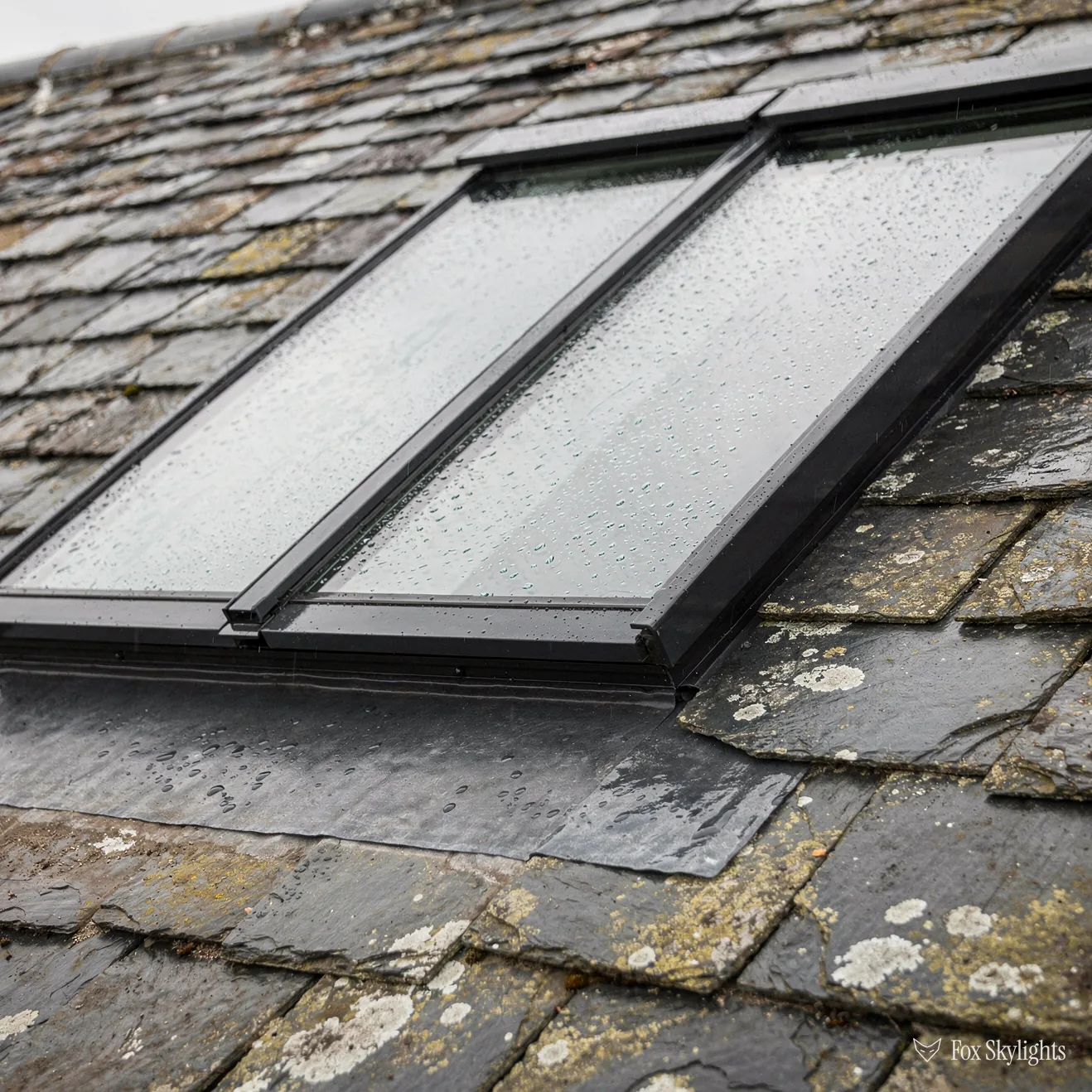
For roofs in the listed core and conservation area, where a thin frame set close to the slope draws the least attention from the street.
-
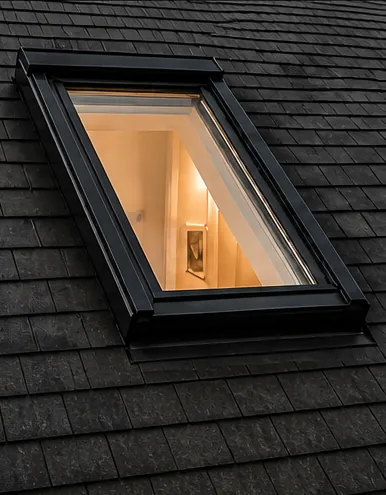 Roof windows
For loft rooms on unlisted houses outside the boundary, placed between rafters after the timbers have been measured from inside.
-
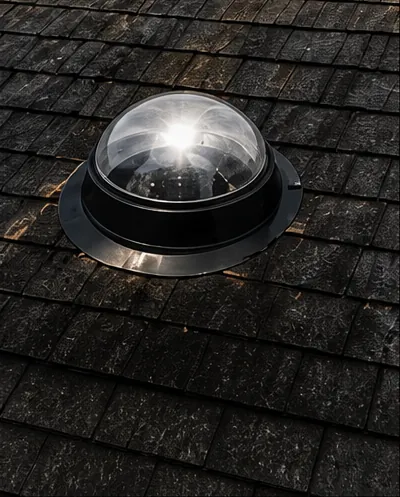 Sun tunnels
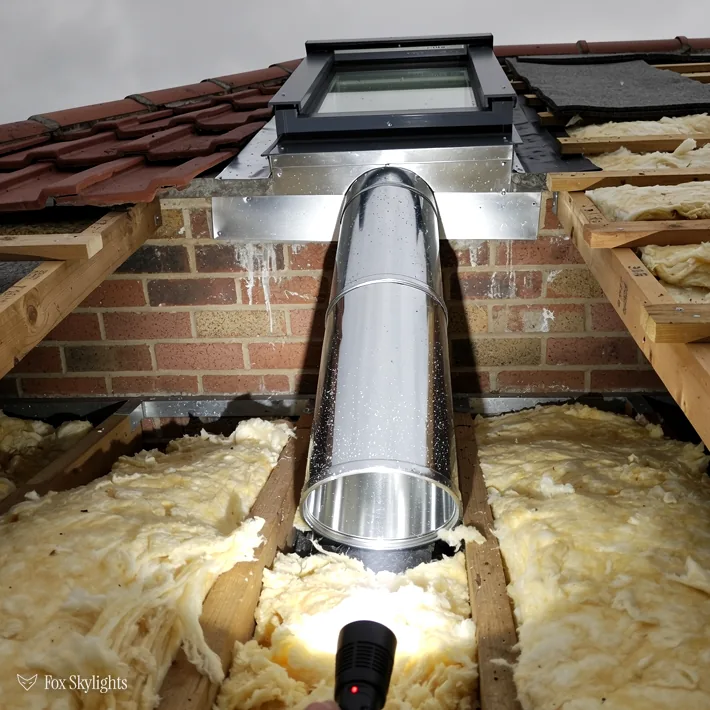
For landings and bathrooms in older houses where a roof opening would be hard to justify, a small dome and a tube can do the job, leaving the slope and the listing untouched.
-
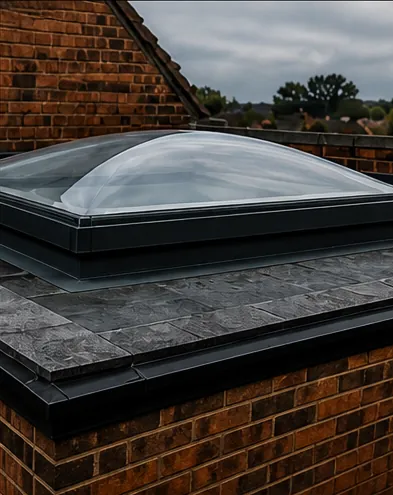 Flat roof rooflights
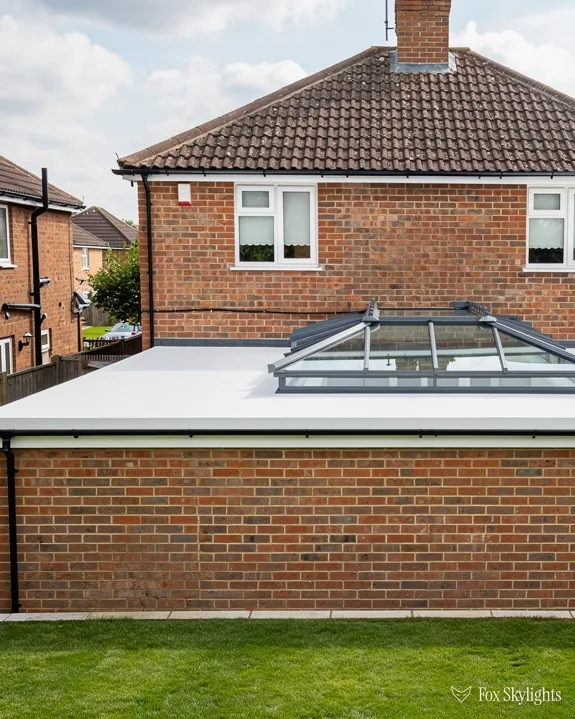
For flat-roofed rear extensions, which can take modern glazing more readily than the historic slope beside them, as long as the extension itself is not part of the listed fabric, which we check first.
Nearby
Repton sits beside Willington and Milton, close to Burton upon Trent, and each town and village around it has a page of its own. Pick the nearest to see how its roofs differ from Repton’s.

THE FOX BROADSHEET · REPTON
South Derbyshire's rules and a village full of listings
Repton, a village and civil parish in the South Derbyshire district of Derbyshire, lies close to the county boundary with Staffordshire. South Derbyshire District Council is the planning authority. A new skylight on an unlisted house is covered by the 2015 order's Class C, which lets it go in unopposed. There are three tests: the glass projects 150mm or less, it stays under the ridge, and a window on a side elevation is obscure and fixed unless the part that opens is higher than 1.7m above the floor.
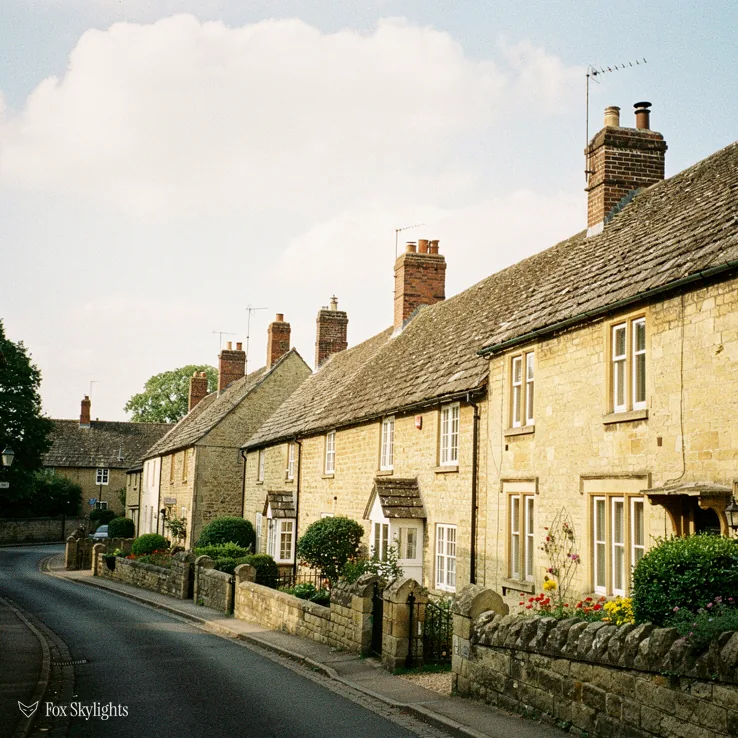
Repton is the village in this part of the world where that ordinary rule is least likely to be the whole story. The conservation area covers the middle of the village and was designated on 17 July 1969. The register lists 37 protected buildings within it: six Grade I, one Grade II* and thirty Grade II. The historic core is described as reflecting exceptional architectural and archaeological continuity, and anyone who has stood in it will not be surprised. Class C survives inside a conservation area. Article 4 is the mechanism that could withdraw it; the council can check your address against any such directions.
Milton is a separate conservation area, designated on 15 July 1971, about 1.5 km from the middle of Repton. It holds six listed buildings, all Grade II. Between them, the two areas explain why we never quote a Repton job from a road name. We look up the address, find the line on the map, and write down which side of it the house sits. If the roof is in the core, the next question is which slope faces the street and which faces the garden. The garden slope is usually where a rooflight can go without argument.
In practice the checking is quick. We search the planning register for the address, read the listing entry where there is one, and ring the council if the answer is unclear. Anything we learn goes into the survey notes, which you receive with the quote.
A reader asks
Our Repton house is listed. Is a rooflight on the back slope ever approved?
It can be, but the application is for listed building consent, and the decision belongs to the council with advice from its conservation officer. A slim conservation rooflight on a rear slope, shown on a clear drawing, is the sort of proposal that has a chance. We help with the survey and the product details that the application needs. Our guide to listed building consent for a rooflight sets out what a decision turns on, and the main planning guide covers the rest.
Building Regulations are their own test. Whatever consent says, a new hole in the roof is building work. When the roof work needs notifying, the notice goes to the district council's own building control or to a privately registered building control approver, and the certificate is kept for you.
Reading a roof when the records go quiet
The public record gives us the listings and the landscape for Repton but no sourced account of its housing, and we will not invent one. What the record cannot say, the loft can. A house of any age tells its own story in the timber: the width and depth of the rafters, whether they are hand-sawn or machine-cut, whether there is a purlin, the heavy beam along the slope that carries them, and how much has been added or altered over the years. We photograph and measure all of that before suggesting anything.
Take the covering too. Under a listed roof, the slates or tiles may be old, hand-made and irreplaceable, and lifting them for a flashing has to be done a course at a time and put back in the same order. We ask for the listing text, note what the covering is, and say in the quote how many courses around the opening will be taken up and relaid. Clean, careful work here protects the roof as much as it lights the room.
On a listed or conservation-area roof, the product choice is narrow, and that is a good thing. A conservation rooflight has a thin frame that sits close to the slope instead of standing proud of it, and a single central glazing bar in place of a wide expanse of glass. Seen from the street, it reads as a small, flat opening in the slope, not a window standing on it. Our guide to what makes a rooflight a conservation rooflight goes through the details.
Light is the other half of the survey. A rooflight on a north slope gives even, cool daylight and little heat. One on a south slope gives more of both, so the glass specification changes. We stand in the room at the hour you use it most and work out which slope suits that, then compare it with what the listing or the conservation area will allow.
The but
Rafters in an old roof were cut by eye, not to a grid, so a stock-width unit may land on timber.
The way in
We choose a narrower unit that fits the real gap, or two side by side, and keep the old rafters intact.
| Repton roof | Look at | Likely answer |
|---|---|---|
| Listed house | Listing and consent | Conservation rooflight |
| Inside the area | Article 4, street view | Low-profile rooflight |
| Unlisted, outside | Rafter spacing | Cut to the rafter gap |
| Rear extension | Fall and kerb | Kerb-mounted rooflight |
| Dark landing | Route through loft | Sun tunnel |
Replacing an old unit brings in Part L: roof windows must reach 1.4 W/m²K (alternatively Window Energy Rating band B), and the ceiling for rooflights is 2.2 W/m²K. Historic buildings have their own treatment under the regulations, and the written quote says what we have assumed.
Should a loft room become a bedroom, Approved Document B counts escape windows only to 4.5m above ground. A loft conversion in a two-storey house therefore relies on a protected stair, leaving the roof window to bring in light and air. Where the roof allows no opening at all, a sun tunnel is an honest alternative.
Forty-five minutes, a floodplain and one old station
Repton lies on the edge of the River Trent floodplain, about 5 miles north of Swadlincote and 5 miles north-east of Burton upon Trent, in gently undulating lowland countryside. From Leicester it is 26.2 road miles north-west, about 45 minutes in the van. That makes it one of the further villages we cover, so a Repton survey is planned as a proper visit. The B5008 runs within a kilometre of the village, and the A38 nearby links Derby and Burton upon Trent, with onward routes to the M1 and the M6.
The nearest railway station is Willington, 1.8 km away in OpenStreetMap and described as about 2 miles north-east of the village, on the Derby to Birmingham line operated by East Midlands Railway. The station opened in 1839, and the Victorian transport links changed how the villages of the Trent valley were reached. Local roads link Repton with Willington, Milton and Foremark. Before modern crossings, the river itself was a barrier. By the mid-twentieth century the population had grown to around 2,200.
Water and green ground surround the village. OpenStreetMap names the Old Trent, the River Trent and a small lake within about 1.5 km, Askew Hill at 0.8 km and Willington Wetlands Nature Reserve at 1.9 km. A house that looks out over open ground is a house where a rooflight earns its keep, because the sky is the view. It is also a house where the south-facing slope can overheat in summer, so a solar control coating on the glass, or one that opens, deserves a conversation at the survey.
Rooms on the river side of the village deserve a glance at the compass before any glass is chosen. A rooflight facing the afternoon sun behaves very differently from one facing north, and the quote names the glass we propose for each opening, with the reason, so you are choosing between real options.
For a house that can take it, an electric opening rooflight lets warm air out of a landing or loft room at the touch of a switch. On a listed roof, the moving parts add complexity to the application, so we say plainly when a fixed unit is the better route to a yes.
A reader asks
Can we put a rooflight on the extension of a listed Repton house?
A flat-roofed extension can be a gentler place for modern glazing than the historic slope beside it, but if it is attached to a listed building, it can fall under the listing, and consent is the council's call. We check the listing description and the age of the extension at the survey. The options for a flat roof are in our guide to flat roof rooflights.