- 01Lace-mill brick and tall chimneys
- 02Victorian terraces, narrow back slopes
- 03Flats above the High Street shops
- 04Canal-side roofs, wet-weather detail
By road from Leicester: 25.2 miles, about 37 minutes, heading north-north-west
Skylights and rooflights in Long Eaton
Lace-town brick, mill streets and three designated areas: a Derbyshire town where the roof question starts with which street you live on.
Or call 0116 430 0516
Lace money built these roofs
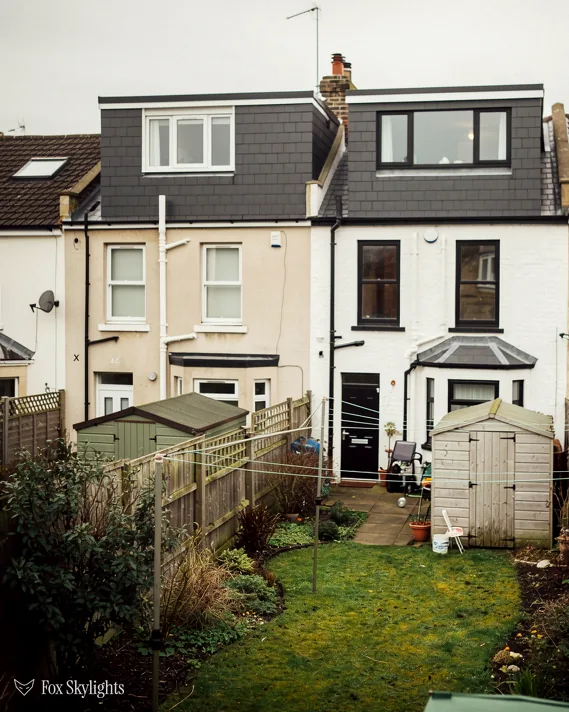
The town passed 10,000 people by 1900 as housing, offices and factories went up through the Victorian years. The terraces from that building boom have long, narrow back slopes, and a row of small rooflights in a line will light a loft better than one large window.
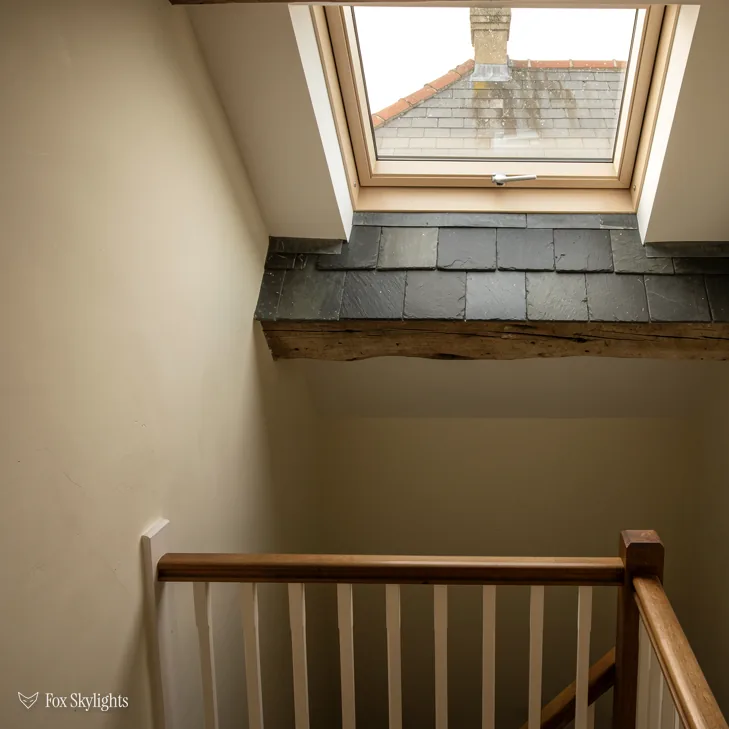
The floors above the shops on High Street and the Market Place are Victorian or early twentieth century. Those rooms often rely on end-wall light alone, so a rooflight in the rear slope is the quiet way to reach the middle.

Inside the conservation areas, front slopes are the ones people watch. We keep the glass to the back and, where the street can see it, use a low flush rooflight rather than a standard roof window with a deep frame.
What tends to suit Long Eaton roofs
-
 Conservation rooflights
For the centre, the lace factory streets and Derby Road, where a slim, low-set frame protects how the slope reads.
-
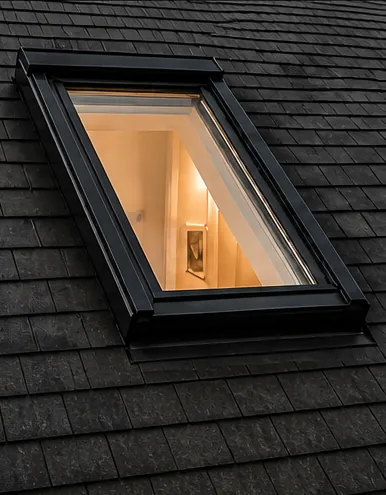 Roof windows
For lofts in the Victorian terraces and later estates, fitted between the rafters after the headroom has been measured.
-
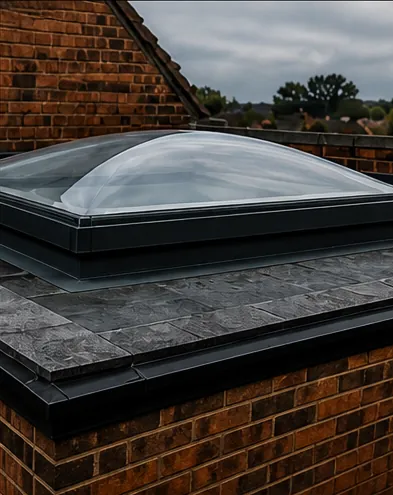 Flat roof rooflights
For the rear kitchens and extensions added under flat roofs, with a kerb built so water leaves the glass.
-
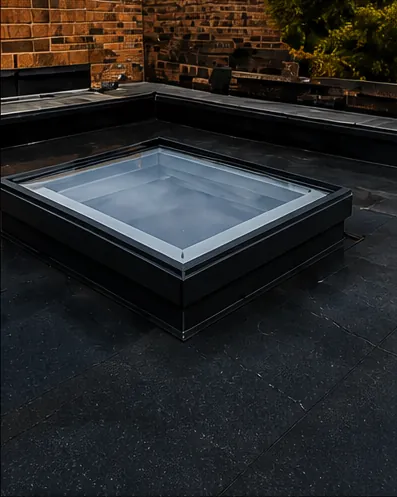 Energy efficient
For older houses whose roofs lose warmth through thin glazing, with a specification that holds the heat in.

THE FOX BROADSHEET · LONG EATON
Erewash Borough Council and three designated areas
Long Eaton is a town in the Erewash district of Derbyshire, so the council that rules on your roof is Erewash Borough Council. A house with ordinary rights can usually take a rooflight on a back slope without an application, if the glass sits close to the slope and stays under the ridge. The list of limits lives in one place, our long guide to planning permission and the Regulations, so we will not rehearse it here.
What is particular to this town is the map. The planning register shows three designated areas with Long Eaton in their names. The Town Centre area dates from 14 September 1993 and holds seven listed buildings, two Grade II* and five Grade II. The Lace Factories area, from 1 October 2005, holds four Grade II. Derby Road, from 23 July 2011, holds three Grade II. The three dates are nearly eighteen years apart, so the council added its protections in stages rather than all at once.
A reader asks
I live on Derby Road. Is a back-slope skylight likely to need an application?
If the house is unlisted and not a flat, the starting point is that you are probably fine even inside the area. The exception is an Article 4 direction, which a council can lay on a street or a property to take that freedom away. Erewash can confirm this for your address before you commit.
Planning and the Building Regulations are different questions. Where a rooflight job is notifiable we send the notice for you, and the paperwork stays with your job file. The product also has to meet the energy standard for existing homes, and the maker's data sheet shows whether it does. We choose accordingly and show you the figures.
The lace factory area is the one that surprises people. It is easy to assume a conservation area is all cottages and church towers, but here it is the town's lace factories, with four listed buildings. If your own house sits near one, you share a skyline with those buildings, and the council cares about what can be seen from the street. A rooflight on the rear slope, out of the line of sight, is the simplest way to avoid an argument.
Industrial streets bring their own surveying habits. Terraces beside a mill were often built in a single campaign, so the rafter spacing and slate type repeat down the row, and a neighbour who has already fitted a rooflight can show us what the roof structure is like in your run. If you know of one, tell us. It saves us guessing, and a loft that has been opened once is a loft we understand.
Lace, wagons and the houses they paid for
For a long time Long Eaton stayed a village of a steady size. Then came the Midland Counties Railway in 1839 and the Erewash Valley Line in 1844, which brought links that encouraged growth. Two industries became the town's big employers: lace-making and railway wagon manufacturing. High Street Mill dates from 1857, and West End Mill of 1882 was built beside the Erewash Canal on Leopold Street. Harrington Mill is a traditional four-storey red lace mill built by a consortium of manufacturers. The town has several fine examples of industrial architecture, and most go back to its life as a lace-making centre.
All those workers needed homes, and the rows of brick houses that went up in answer are the backbone of the town's housing. The roofs are slate or tile, usually with a main pitch to the street, a smaller outrigger at the back and a shared party wall between neighbours. Where a roof has been re-covered at some point, the battens and underlay beneath may be newer than the walls, and we look at both before choosing how the flashing is laid. Lofts in a terrace like that are narrow but long, and a pair of rooflights set along the back slope gives even light down the room. If the owner wants a bathroom or a bedroom up there, a roof window you can reach from the floor and open is worth the extra over a fixed pane.
The but
A terrace roof shares its timbers with the neighbours' roofs on either side, so there is little room to move an opening sideways.
The way in
We measure from the party wall outwards, fit the frame between the rafters on your side, and keep the weathering lead tucked well clear of the line where the next house begins.
The shops are a separate case. The floors above shops in High Street and the Market Place show that large parts of the centre were built in Victorian or early twentieth-century times, and the flats and storerooms up there sit under roofs that you cannot see from the pavement. These are often deep, dark floors, with a window at the front, a window at the back and a long gap between. A rooflight over the middle, or a sun tunnel where there is a ceiling void but no loft room, brings in daylight without touching the street frontage. Remember the flat rule: those upper-floor flats need a planning application, not an assumption. We would rather you heard that from us at the start than from an enforcement letter a year on, and our quote says plainly which route your property is on.
A town that burned once already
Canal, river and the green edges of town
Long Eaton lies just north of the River Trent, about six miles south-west of Nottingham and nine south-east of Derby. The Erewash Canal and the River Erewash both run close by, and the map shows a ring of nature reserves around the town: Fox Covert, Toton Fields, Manor Farm, Forbes Hole and the Toton Washlands among them. For a roofer that adds up to a damp, green, leafy edge. Moss grows on north slopes, leaves collect in valleys and gutters, and any rooflight set low on a shaded slope needs flashing that sheds debris as well as water. Glass with a self-cleaning coating helps a little, and a rooflight within arm's reach of a ladder is easier to wipe down than one above a stairwell, so we think about access before we agree a position.
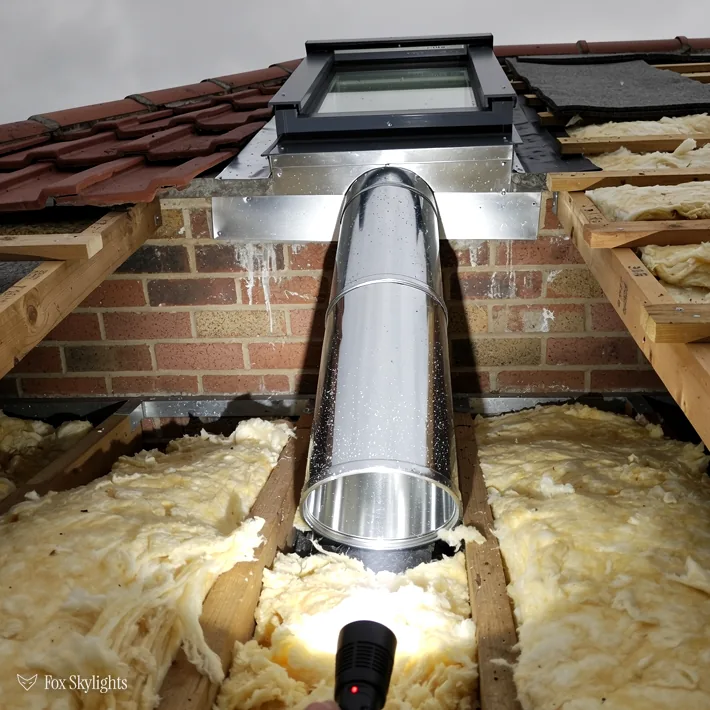
The main road through the town forms part of the A6005, and the B6540 also runs close to the centre. The railway station is open, a short drive from the middle of town. With Nottingham and Derby both within reach, a household that wants more room often asks whether the loft can give it. Toton, a suburb roughly 1.5km out from the centre on the map, is part of the wider housing around the old town, where roofs are often plainer and lofts are of the trussed sort, with light timbers laid in triangles. A roof window there goes in with extra framing round the opening to carry what the cut timber used to hold.
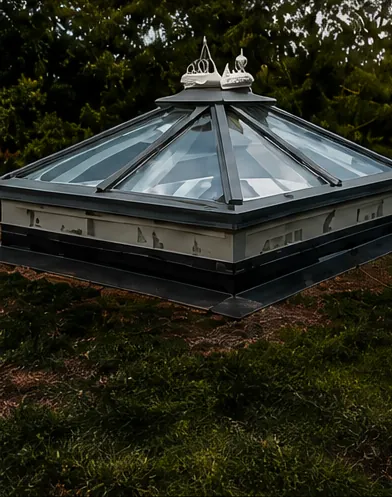
Extensions deserve a mention because extensions are common enough here to need their own advice. A wide kitchen at the back of a Victorian terrace, built under a flat roof, may be well lit by its doors and badly lit everywhere else. A flat rooflight over the cooking and eating zone, set on a kerb with a good upstand, lights the whole room. A bigger room can take a roof lantern, a raised glazed crown above the flat roof with windows in its sides as well as its top, which gives a taller, more open feel. We would not put a lantern on a low ceiling, and we tell you so on the day. A written quote after the free survey sets out the unit, the lining and the finish, so you can compare it like for like with any other quote you hold for the same house.
Before the survey, spend a minute in the room during the hours it gets most use and notice the point where daylight gives out. A kitchen that is bright at breakfast can be dim by early evening, and a lounge at the back may only need help in winter. Tell us what you see, which wall stays darkest and whether the room overheats in summer, and the recommendation starts from how the room is actually lived in, not from a product list.
A reader asks
Which should I pick for a rear kitchen: a rooflight or a lantern?
The ceiling decides. A flat rooflight needs very little height and suits most low extensions, while a roof lantern needs headroom above the room to look right and to keep the framing in proportion. We measure the room first and recommend the one that fits, rather than the one that costs more.
Ready for someone to check your roof here? Book the free survey and fixed written quote, or send a loft photo and your road name by WhatsApp for a first opinion sooner. Installation comes with our 10-year workmanship guarantee, and nothing is cut until the quote is agreed. If you are not sure which of the three designated areas your street falls in, give us the postcode and we will find out, because the answer changes what to check with the council.