- 01Trent crossing since before the bridge
- 02One conservation area, one Grade I
- 03Canal cut, locks and marina nearby
- 04Skylights over water and over lanes
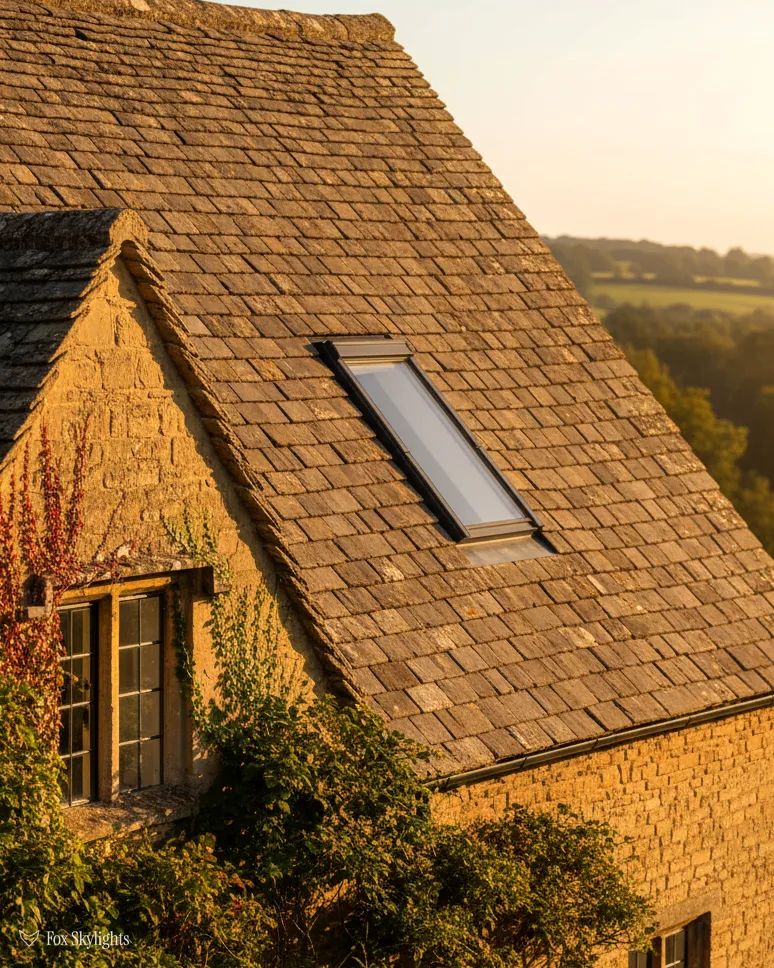
Leicester sends us 23.6 road miles north-north-west up the M1 side to Sawley, 35 minutes if it runs clear
Skylights and rooflights in Sawley
Where the Derwent meets the Trent, a long-settled Derbyshire village keeps its old core, its canal cut and a marina, and its roofs ask for the same careful survey as any other.
Or call 0116 430 0516
River crossing, canal cut, marina
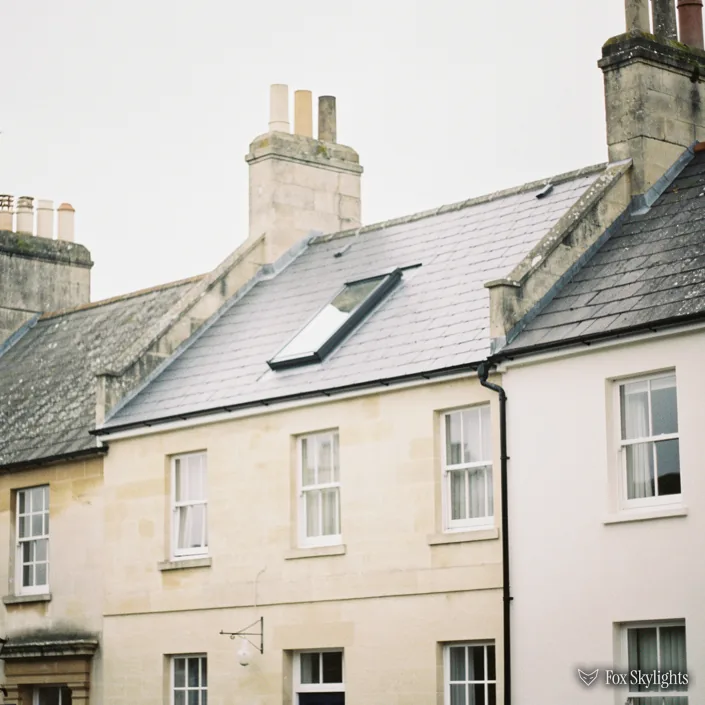
Sawley was the main village on this stretch of the Trent until the nineteenth century. Its conservation area, designated in 1978, holds six listed buildings, one at Grade I, so old roofs here are surveyed with the listing in hand.
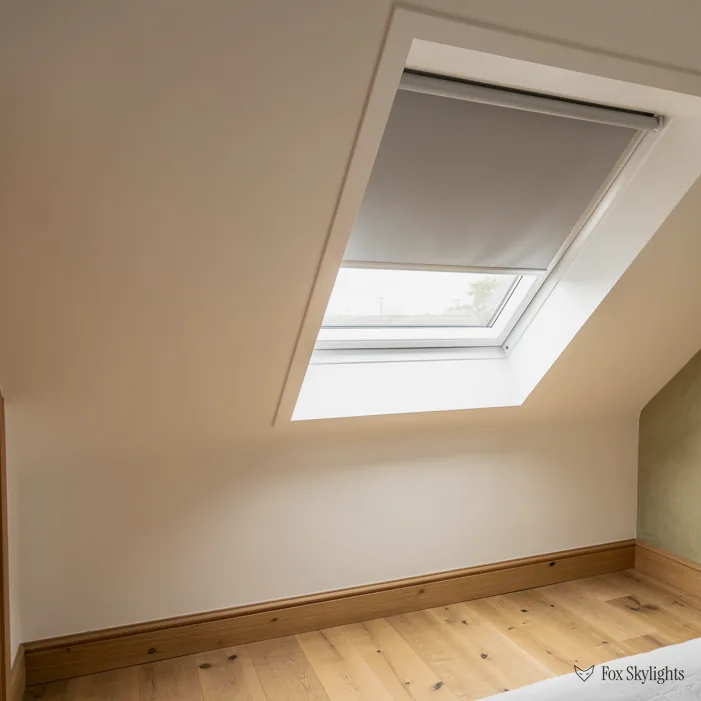
Lofts in a village with this much history vary house to house. We find the rafters and any purlin before drawing the opening, then size a roof window to the gap that the structure offers.
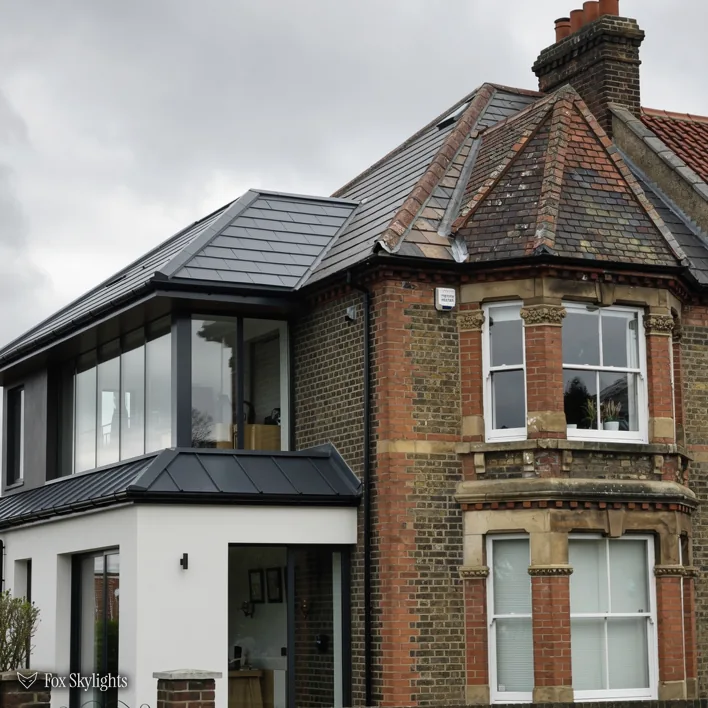
Close to the canal and the marina, a flat-roofed extension or outbuilding often takes light on one side only. A rooflight on a well-built kerb gives the middle of the room its own patch of sky.
Four ideas for Sawley roofs
-
 Conservation rooflights
For roofs in the old core and its lanes, where a thin frame, set flush, respects the listing and the street.
-
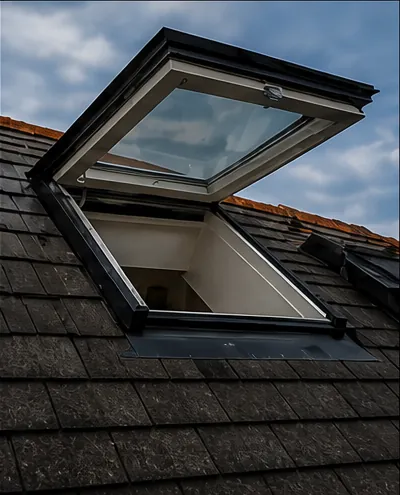 Electric and opening
For households who would rather work a vent from a handset or a wall switch than reach up to a catch.
-
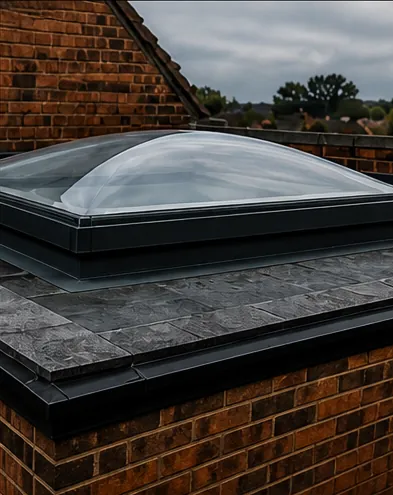 Flat roof rooflights
For single-storey additions and flat-topped outbuildings, where a single large unit lights the space better than small ones.
-
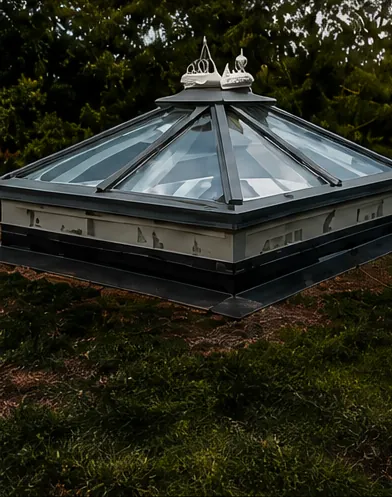
 Roof lanterns
For extensions that want a feature overhead, with a lantern's glazed sides throwing light in from several directions.
Nearby
Long Eaton, Breaston and the other places closest to Sawley are all within easy reach, and each has its own page.

THE FOX BROADSHEET · SAWLEY
Rivers, a cut and the long drive up
Sawley sits in the Borough of Erewash, a village and parish tucked into Derbyshire's south-eastern corner. From Leicester it is 23.6 road miles, heading north-north-west, and takes about 35 minutes. Both the M1 and the B6540 pass close by, and Long Eaton railway station is 0.9 kilometres off. We make the trip for a survey the same way we make a short one, with the tools and the questions already worked out.
Water explains the village. The Derwent joins the Trent between Sawley and the Wilnes, Church Wilne and Great Wilne. Until the nineteenth century, Sawley was the most important village in the area because it commanded the first river crossing above Nottingham, at a time when travellers on the Birmingham road crossed the Trent by ferry or by ford. Harrington Bridge only arrived in 1790. Around 1796 the Sawley Cut and its locks were built to bypass difficult, shallow stretches of the Trent Navigation. The Erewash Canal, Church Wilne Reservoir and the Sheet Stores Basin all show up on the map at not far from the middle of the village.
Sawley Marina grew from the work of the Davison family. By the 1960s it had become established as a leading inland marina after a chandlery shop opened and a Narrow Boat Register was created for boat sales.
The land around the village is not all water and brick. Four nature reserves are recorded within three kilometres: Golden Brook Storage Lagoon, Fox Covert, Forbes Hole and St Chad's Water. That is a roof-surveyor's point as much as a walker's. Houses on the green edge of a village often have a garden-facing slope that nobody overlooks, and that is usually the slope where a larger rooflight can go without argument from anyone. The street side, where passers-by and neighbours see the roof, gets the quieter unit.
A reader asks
We are over 65 and the loft room is a long way up. Can the window be worked without a pole?
Yes. A motorised roof window or rooflight can be opened from a wall switch or a small handset, and a rain sensor can be set to close it when the first drops land. The wiring is routed during the fitting so nothing is left trailing. Our page on electric opening rooflights shows how the controls work.
In the 2011 census the civil parish counted 6,629 people, a slightly higher share of them over 65 than average. That is worth keeping in mind for any rooflight meant to open. A window you cannot reach, or have to stretch for, gets left shut. Ease of use is a design requirement here, not a luxury, and we ask about it at the first visit.
Erewash, a 1978 boundary and one Grade I
Erewash Borough Council holds the planning decisions in Sawley. A house owner who wants a skylight or roof window can usually go ahead without applying, courtesy of Class C in the 2015 General Permitted Development Order, if three boundaries are kept. Height off the slope: 150mm at most. Height overall: below the roof's highest point. Side slopes: frosted glass and a fixed pane, unless the opening part sits above the 1.7m line measured up from the floor.
The planning data names a single conservation area, Sawley, designated on 12 September 1978, with six listed buildings recorded inside: one at Grade I and five at Grade II. The point we use as the middle of the village is under a quarter of a kilometre from it. Anyone living in or beside the old part of Sawley can assume the map matters, and anyone elsewhere in the parish should still glance at it.
The but
The roof is part of a listed building and the owner would like a rooflight over the back bedroom.
The way in
Listed building consent comes first, with drawings of the unit, its frame and its position. Nothing is ordered until the consent is in hand.
An unlisted house inside the conservation area keeps its Class C right. Only an Article 4 direction can strip it away, and Erewash can say whether one covers your road. If the answer is yes, a planning application is needed. If no, Class C applies, provided its limits are met.
What does a listed building application actually involve? A plan of the roof, a drawing or manufacturer's section of the rooflight, a photograph or two of the existing slope, and a short statement of why the opening is wanted and why this position is the least harmful. Councils like to see the unit set between existing rafters rather than cutting new structural timbers, and they like to see a conservation-style frame that sits flush.
For flats and maisonettes the permitted development allowance for householders does not apply, so there the route is a planning application, usually with the freeholder's consent. For the statutory text and the exceptions, read the full planning guide.
A conservation rooflight suits most of the roofs in the old part of the village because its profile is low, its frame is narrow and its glass sits close to the slope. It lets in good daylight without announcing itself from the lane or the water.
How a Sawley survey goes
The sourced facts give us Sawley's history, its water and its planning position, but nothing about housing types. We do not guess at them. What we do is survey every roof the same careful way, so the result is right whatever era the house is from. Outside first, to read the covering and the aspect. Then the loft, for the timbers. Then the room underneath, because that is the one that has to live with the result.
| Roof type | What decides the unit |
|---|---|
| Pitched, rafters | Gaps between timbers |
| Pitched, trusses | Position of web members |
| Flat extension | Fall and joist depth |
| Listed roof | Consent and detailing |
Flat roofs deserve special care near water, where damp air and sudden showers are normal. Here the glass rests on a kerb, an upstand of timber or insulated board that lifts it clear of the roof covering. Rain should run off the upstand, not sit against it, and the roof beside it needs a fall to carry water away. The detail is set out under flat roof rooflights. For a bigger statement in an extension, a roof lantern rises above the roof line with glazed sides and a ridge, lighting a room from several directions.
Not every dark room sits under a slope. Think of an inner landing, or a hallway with a door on every side: loft above, no sky. The sun tunnel was invented for exactly that. Outside there is a small dome. Inside there is a pale disc in the ceiling. Between them runs a tube with a mirrored lining, threaded between the joists, which is why so little of the house is disturbed.
Energy rules shape the glass. Part L, in its 2021 form, sets the bar for an older house, and the numbers are short enough to put in a table. A loft turning into a bedroom brings in Approved Document B, and its 4.5m rule: nothing higher than that counts for an escape window. In a two-storey house the new room sits above that line, which makes a protected stair the lawful way out, while the window brings daylight and a breeze. That comes up at the survey, well before an inspector could raise it.
| New unit | Standard to meet |
|---|---|
| Roof window | U-value 1.4, or WER band B |
| Rooflight | U-value 2.2 |
Behind those two lines lies a practical point. A lower U-value means less heat escaping through the glass, which matters most on a north slope in January and on a bedroom ceiling at night. Triple glazing, warm-edge spacers and a gas fill between the panes all push the number down, and each adds a little to the price too. The quote carries the figure for the exact unit, which lets you set it beside whatever is in the roof today.
A reader asks
Will a new rooflight make the room too hot in summer?
Sometimes, when the glass does not suit the aspect. A south-facing slope with ordinary glazing will gather heat. Solar control glass, a blind, or a smaller unit placed higher on the slope all help, and a unit that opens lets hot air leave from the highest point of the room. We talk about the aspect at the survey and put the glass specification in the quote.
Old units that have stopped working, or whose panes have misted, can be swapped into the existing opening if the surround is sound. Replacing misted rooflights covers what we check before we agree to do that.
Sawley is a village and civil parish in the Borough of Erewash, in southeast Derbyshire, and its conservation area records six listed buildings, one of them Grade I. Long Eaton station is 0.9 km away and the M1 passes close by, which keeps the village easy to reach from the east Midlands road network.